Navigating the world of adult social care can feel overwhelming, but the basic idea is really quite simple: getting the right help to live a full and independent life. Support for adults with learning disabilities isn't some rigid, off-the-shelf package. It’s much better to think of it as a personalised toolkit, built from the ground up to fit an individual’s unique needs, ambitions, and dreams.
How Support Is Built Around You
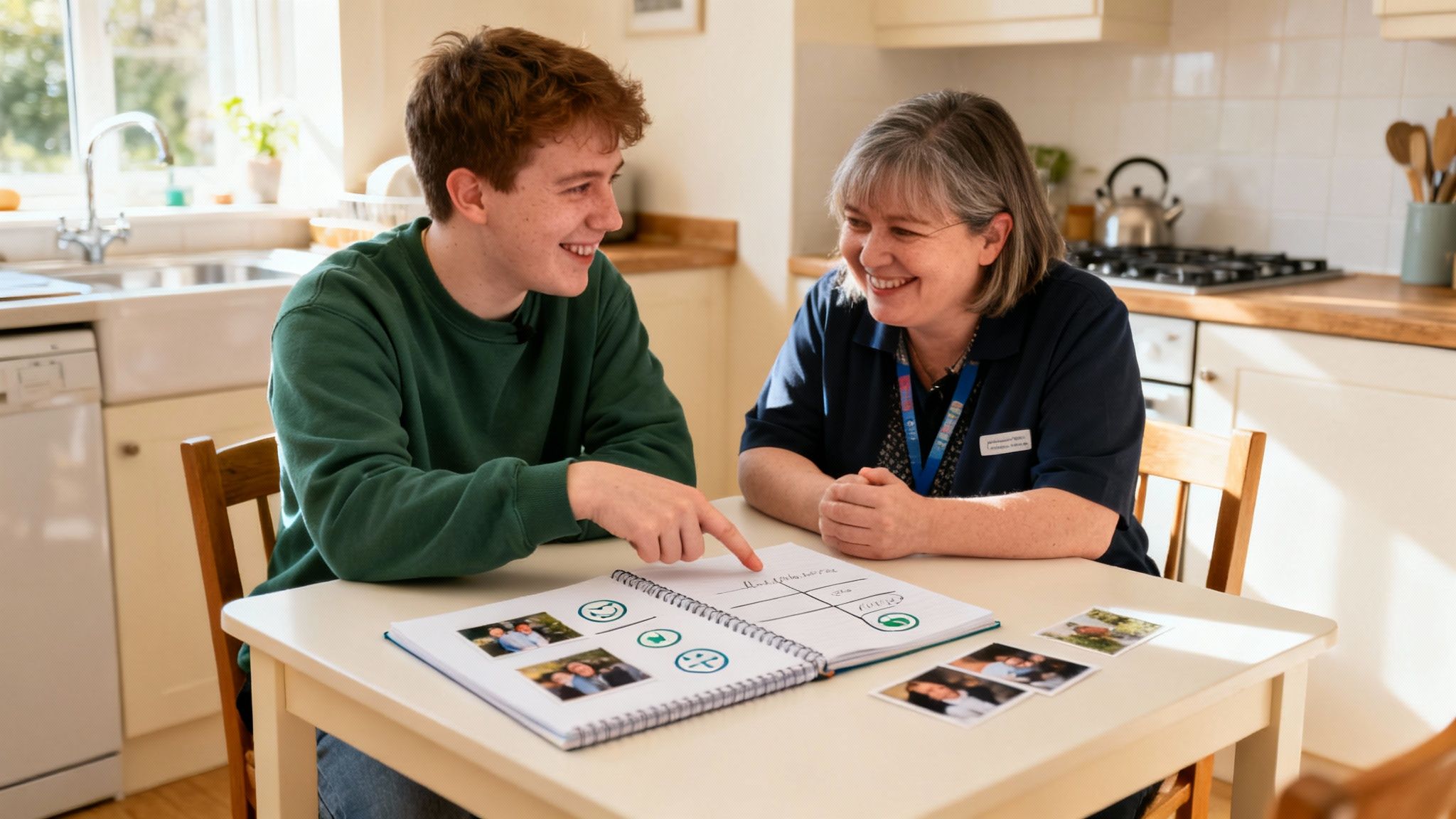
Thankfully, the days of expecting people to slot into whatever services were available are long gone. Today, the entire system is built around a principle called person-centred planning. This approach puts the individual right at the centre of every single conversation and decision, making sure the support they get truly reflects what matters to them.
It’s about so much more than just ticking boxes for basic needs. It's about digging into what a person truly wants to achieve. Do they dream of learning to cook their favourite pasta dish? Do they want the confidence to catch the bus into town on their own? Or maybe they'd love to find a volunteer job that gives them a sense of purpose? This way of working ensures support is always meaningful, helping people reach personal milestones, no matter how big or small.
What Is Person-Centred Planning?
At its heart, this is a team effort. It brings together the individual, their family or carers, and support professionals to map out a clear plan. This plan becomes a shared roadmap, guiding everyone involved to help the person live the life they want for themselves. We explore this in more detail in our guide on what is person-centred care.
This collaborative spirit makes sure everyone is pulling in the same direction. It typically focuses on:
- Strengths and Talents: Looking at what a person can do and what they enjoy, not just the challenges they face.
- Personal Goals: Setting clear, achievable targets that are genuinely important to the individual, whether that’s making new friends or learning a new skill.
- Choice and Control: Giving the person a real say in who supports them and how that help looks day-to-day.
- Flexibility: Realising that people’s needs and goals change, and building in regular reviews to adapt the plan along the way.
Essentially, instead of asking someone to fit into a pre-existing service, the service is built to fit the person.
The goal is to empower adults with learning disabilities, giving them more choice and control over their own lives. It's about building independence, not creating dependence.
Why This Matters in the UK
Looking at the numbers across the UK, you can see why a one-size-fits-all approach just wouldn't work. While 1.5 million people in the UK have a learning disability, only about 58,000 of them are supported by day care services. That's a tiny fraction, just 3.9%.
On top of this, 29,000 adults with a learning disability are living with parents who are over 70 years old, which points to a looming need for robust, flexible support. These figures make it crystal clear that every person's situation is different, and the support they receive has to reflect that reality.
What Does Local Support Actually Look Like?
Once you grasp that support should be built around the individual, not the other way around, the next question is what that help looks like day-to-day. Across Hampshire and West Sussex, there's a whole host of services designed to build skills, boost independence, and simply make life richer.
It’s best to think of these options not as separate boxes to tick, but as tools you can mix and match to build a truly personal support network. The goal is always to find the right blend of support for adults with learning disabilities that helps someone flourish in every part of their life—at home, at work, and out in the community.
Let's break down the main types of support you’re likely to come across.
Building Skills and Friendships at Day Services
Day services, often called day opportunities, are places where adults can spend their weekdays doing things that matter to them. They're so much more than just somewhere to go; they are lively hubs for learning, making friends, and personal growth. A good day service provides a steady routine that builds confidence and gives a real sense of purpose.
At The Grow Project, for instance, our sessions are all about helping people develop practical life skills in a safe, encouraging space. This could be anything from learning to cook healthy meals and manage a budget to getting stuck into creative arts or fitness activities. The focus is always on what the person wants to achieve, whether that’s making new friends or gaining skills for a future job.
These services also play a massive part in tackling social isolation. For many, day services are where they forge lasting friendships and feel they belong to a community that gets them.
Gaining Independence at Home
For a lot of people, living as independently as they can is a huge goal. This is where supported living and personal care come in. These services are designed to provide just the right amount of help, whether that’s in a person's own home or in a supported housing setup.
This kind of support is incredibly flexible and is always moulded around what the individual needs. It might mean just a few hours of help each week, or it could involve round-the-clock assistance.
- Personal Care: This is hands-on help with daily routines like washing, dressing, or managing medication.
- Household Support: This can include assistance with cooking, cleaning, shopping for groceries, or paying bills.
- Supported Living: This is a broader setup where people might live in their own flat or a shared house, with support staff on hand to help them manage everything safely and live a full life.
The whole idea behind this kind of support is empowerment. It’s about giving people control over their own home and daily life, with a safety net of support to help make it a success.
Finding Fulfilling Work with Employment Support
Having a job or a meaningful volunteer role does wonders for self-esteem and feeling part of the community. But getting into the world of work can have its challenges. That's where specialised employment support services come in, acting as a bridge to help adults with learning disabilities find their footing.
This is really practical support, shaped around each person's skills and what they want to do. It often includes:
- CV Writing: Getting a professional CV together that really shows off a person's strengths.
- Interview Practice: Building confidence with mock interviews and helpful coaching.
- Workplace Adjustments: Chatting with employers to make sure the work environment is right for the individual.
- On-the-Job Support: Providing a job coach who can help someone learn the ropes and settle into their new team.
This support isn't just about getting a job; it's about helping someone to thrive and grow in their role. It’s a path to greater financial independence and a powerful sense of achievement.
Connecting with the Community Through Travel Training
Feeling confident and safe getting from A to B is a cornerstone of independence. Travel training is a specialised kind of support that teaches people how to use public transport on their own. It’s a skill that opens up a whole new world, making it possible to visit friends, get to work or college, or just explore local activities.
The training is broken down into small, manageable steps. A support worker will guide the person every step of the way until they feel completely secure. This process builds not just practical skills but also problem-solving abilities and a massive dose of self-assurance.
You can learn more about how public transport training helps with accessing the community in our detailed article. It truly transforms how a person can get out and about in their own town or city.
How to Access and Fund the Right Support
Figuring out assessments and funding can feel like the biggest hurdle when you’re trying to arrange support for adults with learning disabilities. It's a world filled with forms, meetings, and official-sounding terms. My goal here is to cut through the jargon and give you a clear, practical map to navigate the system in Hampshire and West Sussex.
For almost all state-funded support, your journey will begin with your local authority. Depending on where you live, you'll need to connect with either Hampshire County Council or West Sussex County Council. Their adult social care teams are the gatekeepers – they’re responsible for working out who qualifies for help and what that help should look like.
It all starts with a conversation, officially known as a needs assessment.
What to Expect from a Needs Assessment
Don't let the formal name put you off. A needs assessment is simply a structured chat designed to understand a person's life – their strengths, their challenges, and what they want to achieve. A social worker will meet with the individual, and usually their family or carers, to get a full picture.
The conversation will touch on all sorts of things, such as:
- Personal Care: Help with daily routines like washing, dressing, or making meals.
- Running a Home: Support with things like cleaning, shopping, and paying bills.
- Getting Out and About: Talking about ways to make friends and join in with community life.
- Staying Safe: Making sure the person feels secure at home and when they're out.
- Future Plans: Exploring ambitions, whether that’s learning a new skill or finding a job.
Being open and honest here is absolutely crucial. The more detail you can share, the better the final support plan will be. It’s a great idea to jot down some notes beforehand so you don't forget any key points on the day.
This assessment isn't a test; it's a collaboration. Its sole purpose is to pinpoint where support can make a genuine difference, giving the individual as much choice and control over their own life as possible.
Mapping Out Your Funding Options
After the assessment, the local authority decides if the person meets the criteria for funded support. If they do, you'll be told how much funding they've been allocated in what's called a personal budget. This is a specific sum of money calculated to cover the cost of the care they need.
From there, you have a few ways to manage this money:
- Direct Payments: The council pays the personal budget straight to the individual (or someone they nominate). This gives you total control to choose and pay for your own support, like booking sessions at The Grow Project. You essentially become the customer.
- Council-Managed Budget: The council hangs onto the budget and sorts out the services on your behalf. This is a solid choice if you’d rather not deal with the financial admin yourself.
- A Mix of Both: You can split it. The council could manage some parts of the support, while you use a Direct Payment to handle others.
This diagram helps to visualise how different types of support fit into daily life, work, and the community.
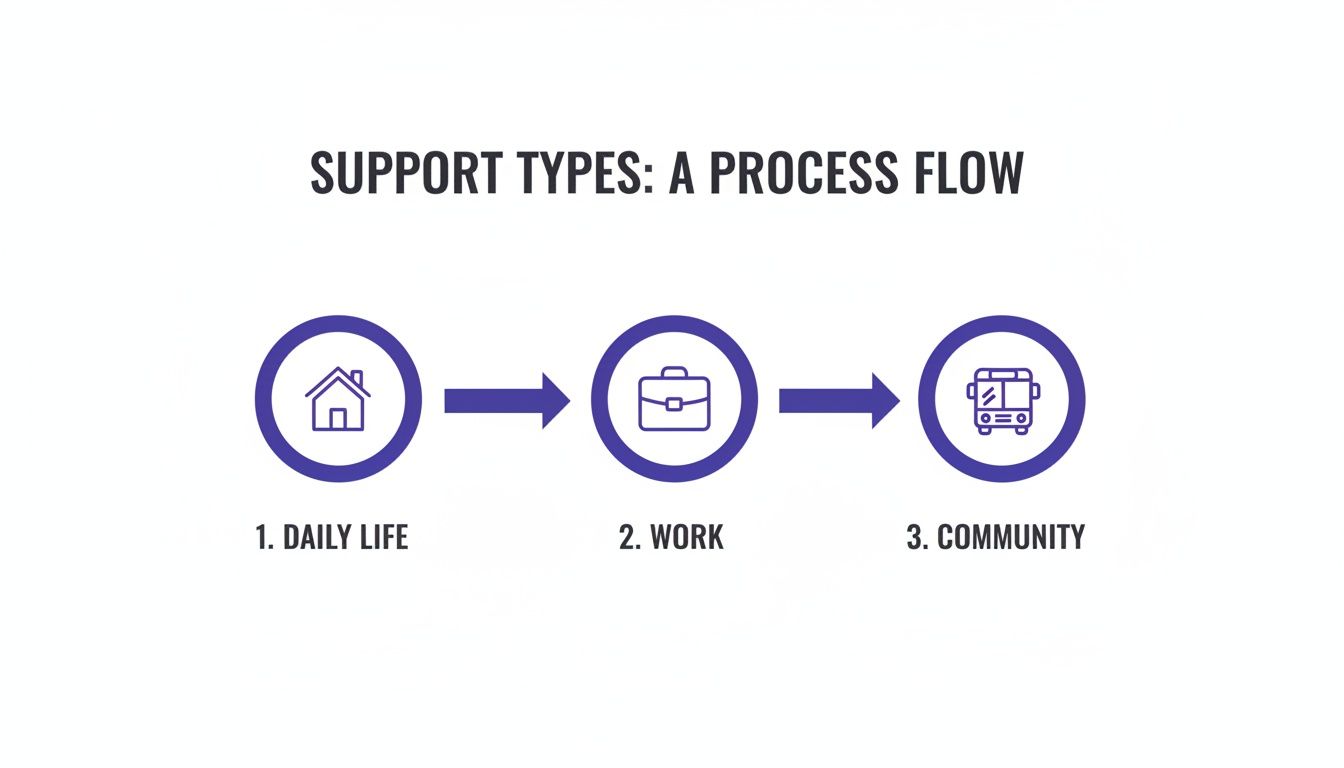
The whole point of this process is to direct funding where it matters most—whether that’s building independence at home, getting into work, or simply becoming a more active part of the local community.
Other Important Funding Avenues
While the local authority is the main route for most, it’s certainly not the only one. It pays to be aware of all the options out there.
NHS Continuing Healthcare (CHC)
If someone’s main need for support is health-based, they might be eligible for NHS Continuing Healthcare. This is a package of care that is arranged and funded entirely by the NHS. Getting it involves a separate and very thorough assessment process.
Benefits like Personal Independence Payment (PIP)
PIP is a benefit specifically designed to help with the extra costs that come with a long-term health condition or disability. Crucially, it isn't means-tested, and you can spend it on whatever you feel will help most. Many people use their PIP to pay for day services or other activities that improve their wellbeing and independence.
If you think a service like ours could be the right fit, a great first step is to fill out our simple referral form for adults with learning disabilities. It’s a no-obligation way to start the conversation with us about funding and securing a place.
Choosing the Best Local Services for You
So, you’ve got a funding plan sorted. Fantastic. Now comes the really important part: finding a local service that just feels right. It can feel like a huge task, but breaking it down makes it much more manageable. Think of this as your practical toolkit for navigating the options in Hampshire and West Sussex and making a choice that truly puts your loved one's happiness first.
Your search for quality support for adults with learning disabilities is best started with sources that have already done some of the legwork for you. These organisations have vetted providers, which can save you a ton of time and give you peace of mind.
Here are a few of the best places to begin:
- Local Authority Directories: Both Hampshire and West Sussex County Councils keep official lists of approved service providers. This is a solid, reliable starting point because any service listed has to meet specific quality and safety standards.
- Online Searches: Don't underestimate a simple Google search. Trying phrases like "day services for adults with learning disabilities in Southampton" or "supported living in West Sussex" will often uncover a whole host of options, including brilliant independent providers like The Grow Project.
- Word-of-Mouth: This is often the most powerful tool you have. Chat with other families, talk to your social worker, or connect with co-ordinators at local community groups. Their honest, real-world experiences can offer insights you’ll never find on a glossy website.
Your Essential Checklist for Sizing Up Providers
Once you've got a shortlist, it's time to do a bit of digging. The next step should always be arranging a visit or at least a detailed phone call. Going in armed with a set of key questions will help you compare different places fairly and make sure you don’t forget to ask something crucial.
This is about more than just what a service offers on paper. You’re trying to get a feel for their culture, the attitude of their staff, and how well they actually listen to the people they support. A good provider will welcome your questions and be open with their answers.
A truly person-centred service will be just as interested in getting to know the individual as you are in getting to know them. That first conversation should feel like the start of a partnership, not a one-sided interview.
To help you get started, we've put together a list of key questions. Use it as a guide to structure your conversations and gather all the info you need to make the best possible decision.
Key Questions to Ask Potential Support Providers
When you're visiting or speaking with a service for the first time, it's easy to get sidetracked. This table is designed to keep you focused on what really matters—finding a safe, engaging, and genuinely supportive environment.
| Area of Enquiry | Essential Questions to Ask |
|---|---|
| Person-Centred Plans | How do you involve the individual and their family in creating and reviewing their support plan? Can we see an anonymised example? |
| Staffing and Training | What qualifications and training do your staff have? What is your staff-to-participant ratio? |
| Activities and Timetable | What does a typical day or week look like? How do you tailor activities to individual interests and goals? |
| Community Involvement | How often do you support individuals to get out into the local community? What kind of outings do you organise? |
| Safeguarding Policies | Can you explain your safeguarding procedures? How do you ensure the safety and wellbeing of everyone you support? |
| Communication | How will you keep us updated on progress and any issues that arise? What is your preferred method of communication? |
Having these answers will make comparing your shortlisted providers much clearer and more objective, helping you move forward with confidence.
Why a Taster Day is a Must
Reading a brochure or chatting with a manager is one thing. Experiencing a place firsthand is something else entirely. That’s why a 'taster day' is such a vital step in making the final decision. It gives the individual a chance to try a service out for a day, completely commitment-free.
A taster day is their opportunity to meet the staff properly, join in with a few activities, and just get a feel for the atmosphere. It’s hands down the best way to see if they feel comfortable, happy, and genuinely engaged.
Afterwards, their feedback is the single most important factor. Did they enjoy it? Did they click with anyone? Their feelings and preferences have to be at the very heart of the choice you make together.
Real Stories of Growth and Independence

It’s one thing to talk about theories and support plans, but it’s another thing entirely to see the real-world impact. The true value of good support for adults with learning disabilities shines through in the achievements of the people we work with every day. These stories are about moving past the paperwork and celebrating the moments that genuinely build independence and self-worth.
Every step forward, big or small, shows what’s possible when the focus shifts to what a person can do. Here at The Grow Project, we get to witness these breakthroughs firsthand as people tackle challenges, form real friendships, and find the confidence to live the lives they choose.
From Anxious Traveller to Confident Commuter
Take Liam, for example. He’s a young man who joined us with a huge desire for more independence, but one major hurdle stood in his way: a deep-seated anxiety about using public transport. Just the thought of figuring out a bus timetable or dealing with an unexpected delay was enough to feel completely overwhelming.
So, we started small. At first, a support worker would just hop on a bus with Liam for a short ride—no destination, just getting used to the environment. From there, they began planning simple routes together and pointing out landmarks. The next step was Liam buying his own ticket.
What started as a source of real fear gradually became a point of pride. The day Liam took his first solo bus trip to meet his friends in town was a massive win, not just for him but for everyone who had been part of his journey.
This one skill opened up his entire social world. Suddenly, he wasn't relying on others for lifts, and a whole new range of opportunities became accessible to him.
Developing Skills for a Fulfilling Role
Then there's Sarah, who really wanted to find a role where she could feel valued and make a contribution. She has a wonderfully methodical approach to tasks but was held back by a lack of confidence and hands-on experience in a work-like environment.
We channelled her skills into our social enterprise activities. She began by helping to organise materials for our craft sessions, and her natural talent for organisation was immediately obvious. She soon learned about managing stock, preparing resources, and collaborating with a team to get a job done.
This experience was the springboard she needed to apply for a volunteer position at a local charity shop. We helped her with the application and prepped for the interview, and she got the role! She is absolutely thriving there now, and her knack for sorting and organising donations is genuinely appreciated.
Why This Matters More Than Ever
These personal victories are powerful, especially when you look at the bigger picture. In the United Kingdom, there's a significant employment gap for adults with learning disabilities, with only 6.6% in secure, paid work. This statistic really brings home the importance of services like The Grow Project that offer vital training in employability and money skills. You can delve into more learning disability statistics to see the full context of these challenges.
Our aim is to create clear pathways to greater independence and inclusion, one person at a time. The journeys of Liam and Sarah are just two examples of how the right support at the right time can unlock a person's true potential, turning their goals into life-changing realities.
Why Specialised Support Is More Important Than Ever
The world of support for adults with learning disabilities looks very different today than it did a decade ago. As our understanding of conditions like autism has deepened, it's become crystal clear that a one-size-fits-all approach just doesn't work anymore. Forward-thinking, specialised services aren't just a nice-to-have; they are absolutely vital for helping people build full and independent lives.
This change is really being driven by the young adults coming into adult services now. They have different expectations and, often, more complex needs than previous generations. A huge part of this is the rising number of people with specific diagnoses who need more than just a friendly face and a safe space. They need an environment that's professionally designed to understand and respond to them as individuals.
Adapting to a New Generation
This means modern day services have to be ready to handle a wide variety of needs with genuine skill and sensitivity. It’s about moving beyond basic care and creating a setting that actively helps people overcome challenges while building on their unique strengths.
So, what does that look like in practice? It could mean:
- Sensory Considerations: Designing calm, low-arousal spaces for people who get overwhelmed by noise and activity.
- Structured Communication: Using really clear and consistent ways to communicate, like visual timetables or social stories, which helps reduce anxiety.
- Predictable Routines: Establishing a reliable daily structure so individuals feel secure and know what's coming next.
This isn’t just about ticking boxes. It’s about creating an environment where everyone can truly thrive.
It's no longer enough for a service to be simply welcoming. It must be proactively structured and professionally staffed to meet the nuanced needs of the next generation, ensuring every person has the right tools to succeed.
Understanding the Rising Need for Specialised Care
The urgency for this kind of support isn't just a feeling; the numbers tell a powerful story. We're seeing a massive increase in the number of young people with specific diagnoses who will soon be looking for adult support.
In England, the number of Education, Health and Care Plans (EHCPs) for autism is on track to nearly triple in just ten years, jumping from 54,000 in 2015 to an estimated 149,000 by 2025. Think about that for a moment. This wave of young adults will soon be knocking on the door of adult services, and they will need day opportunities that are expertly set up for their specific sensory, social, and communication needs. You can dig deeper into these trends in this report on support for children with disabilities.
This data is more than just a statistic—it’s a call to action. It’s why organisations like The Grow Project are so important. We've built our service from the ground up to offer exactly this kind of prepared, professional support. It means we’re not just ready for the future; we're actively helping to shape a better, more effective way of supporting adults with learning disabilities across Hampshire and West Sussex.
Your Questions About Adult Support Answered
Trying to figure out support for adults with learning disabilities can feel like a maze. It’s natural to have a lot of questions. To help you find your way, we've answered some of the queries we hear most often from families across Hampshire and West Sussex.
Let's get straight to the practical stuff that really matters, so you can feel clear and confident about the next steps.
What Is the First Step to Getting Support?
Your starting point is almost always your local council's adult social care team. If you're local to us, that means getting in touch with either Hampshire County Council or West Sussex County Council to ask for a needs assessment.
This assessment isn't a test; it's just a conversation to understand someone's specific situation, what they find tricky, and what they want to achieve. Think of it as the key that unlocks potential funding for support services. Don’t wait for a professional to refer you – you can absolutely get the ball rolling yourself.
How Much Control Will We Have Over Support Choices?
A huge amount, actually. Modern support is built around a concept called person-centred planning, which puts you firmly in control. If the council agrees that support is needed and provides funding, it’s given as a personal budget.
You then get to decide how that money is handled:
- Direct Payments: The funds are paid straight to you or the person needing support. This gives you maximum freedom to choose and pay for providers you think are best, like The Grow Project.
- Council-Managed Budget: The council takes care of arranging and paying for the services. This is a great option if you’d rather not manage the finances yourself.
- A Combination: You can also have a bit of both, blending the two approaches to get the best of both worlds.
The whole system is designed to put you and your family in the driver's seat.
Remember, a good provider doesn’t just offer a workaround; they adapt their entire approach to support someone properly. It's about creating a truly fair and supportive experience, not forcing someone to fit into a pre-set box.
Can We Change Providers If We're Not Happy?
Yes, absolutely. If a service isn't the right fit, you are not stuck.
When you're using Direct Payments, you have the flexibility to switch providers. The personal budget is there to find support that genuinely helps someone grow and thrive.
If the council manages the budget, you can still speak up. If something isn't working, talk to your social worker and ask for a review. Finding the right support for adults with learning disabilities is a partnership, and you should always feel that your chosen provider is the best possible one.
At The Grow Project, we work hard to create a place where everyone feels supported and empowered to flourish. To see how our person-centred approach helps adults build skills, friendships, and independence, come and find out more about us at wordpress-623853-2036582.cloudwaysapps.com.