At its very heart, person-centred care represents a simple but profound shift in thinking. It moves away from asking, 'what's the matter with you?' and towards a much more empowering question: 'what matters to you?'. This simple change ensures that support is built around an individual's unique needs, preferences, and goals, placing them right at the centre of every decision as an equal partner.
What Does Person Centred Care Actually Look Like?

Think of it like getting a bespoke suit made, rather than just buying one off the peg. An off-the-peg suit is designed for a generic 'average' person. It might do the job, but it rarely feels perfect because it wasn’t made for you. It serves a basic function but ignores your individual proportions, your comfort, and your personal style.
A bespoke suit, on the other hand, is crafted entirely around you. The tailor listens carefully to what you want, measures you precisely, and creates something that not only fits your exact shape but also reflects your personality. The whole process is a collaboration, with you making the key choices.
The Shift from 'Doing For' to 'Doing With'
For a long time, traditional models of care have felt a bit like that off-the-peg suit. They often rely on standardised plans and rigid routines that focus mainly on a person's diagnosis or disability, not on their personal goals or what brings them joy. This can easily create a dynamic where professionals are ‘doing for’ someone, rather than genuinely ‘doing with’ them.
Person-centred care flips that outdated dynamic completely. It always starts with the individual, recognising them as the true expert in their own life. It’s a partnership built on a foundation of dignity, respect, and open, compassionate communication.
This philosophy is about so much more than just a support plan; it's a fundamental change in how care and support are delivered. To truly understand the difference, it helps to see the two approaches side-by-side.
Shifting from Traditional Support to a Person Centred Approach
| Traditional Care Model Focus | Person Centred Care Focus |
|---|---|
| Focus on the person’s disability or diagnosis. | Sees the whole person first, not their label. |
| Fits the person into a pre-existing service. | Designs the service to fit the person’s life. |
| Decisions made by professionals or ‘experts’. | Decisions are made together, in partnership. |
| Focuses on deficits and what the person can't do. | Builds on the person’s strengths and abilities. |
| Aims to manage needs and reduce risks. | Aims to help the person achieve their aspirations. |
| Creates dependency on the service. | Fosters independence and community connection. |
This table shows a clear move from a passive, one-size-fits-all system to one that is active, collaborative, and entirely personal.
It's about putting these core principles into practice every single day:
- Seeing the Person First: Valuing the individual for who they are, beyond their disability or condition.
- Building a Real Partnership: Working collaboratively with the person, their family, and their wider circle of support to design and review how things are going.
- Focusing on Strengths: Building on what a person can do and is good at, not just concentrating on the things they find difficult.
- Driven by Personal Goals: Ensuring all support is geared towards helping the individual achieve what they want from life.
So, what is person-centred care? It's a commitment to making sure every single person receiving support is truly seen, heard, and empowered. It's the framework that allows people to build confidence, grow their independence, and live a life that is truly meaningful to them. This approach doesn't just manage needs; it actively champions aspirations.
The Guiding Principles of Person Centred Care

It’s one thing to understand the philosophy of person-centred care, but it’s another thing entirely to see it in action. This approach isn't just a vague ideal; it's built on several core principles that bring the theory to life in a practical, day-to-day way. Think of them as the active ingredients that make support meaningful and effective.
These principles work together, creating a supportive environment where people feel valued, heard, and genuinely in control of their lives. It's a commitment to seeing the whole person, not just their disability, and building a true partnership based on trust and mutual respect.
Dignity, Respect, and Compassion
The absolute bedrock of person-centred care is treating every single person with dignity, respect, and compassion. This is so much more than just basic politeness. It means really listening to someone’s views, respecting their history and values, and providing support in a way that protects their privacy and self-worth.
Compassion isn’t just about being nice. It’s about trying to understand what someone else is feeling and experiencing. In a care setting, that translates into being patient, kind, and responsive, especially when someone is finding things difficult. It’s about building a connection that helps a person feel safe and understood.
You can see this principle at play in every single interaction—from the language staff use to how personal care is delivered. It’s the difference between someone feeling like a task on a checklist and feeling like a valued individual.
The Power of Co-production
Co-production is a game-changer. It moves way beyond just asking for feedback or ticking a box. It means that individuals, their families, and care providers work together as equal partners to design, plan, and review support. It's a truly collaborative process.
Instead of a service being designed for someone, it is designed with them. This ensures the person's own expertise in their life—what they know works for them—is front and centre.
Co-production is the difference between filling out a survey about activities you might like and sitting down together to actually design the weekly timetable. If someone wants to learn to travel independently, their plan would be co-produced to include practical steps like planning a route, practising on the bus, and getting to know the local area—all driven by their ambition.
Personalised Care and Support Planning
Everyone is different, so their support has to be, too. This principle is all about making sure care is carefully organised around an individual’s specific needs, strengths, and goals. A personalised care plan is a living, breathing document that outlines not just what support is needed, but how it will be delivered in a way that truly works for that person.
This plan should grow out of a collaborative conversation, capturing what’s important to the person right now and what they hope for in the future. It’s a dynamic tool, not a static document left in a folder. It should adapt as a person's goals and circumstances change, ensuring support stays relevant over time.
This commitment to proper personalised planning isn't just good practice—it’s the law.
Grounded in UK Law and Regulation
In the UK, the principles of person-centred care are cemented in the legal and regulatory frameworks that govern adult social care. This is crucial because it gives individuals and their families real power to advocate for high-quality, personalised support.
Two key pieces of the puzzle are vital here:
- The Care Act 2014: This landmark legislation places a legal duty on local authorities to promote an individual's wellbeing. Crucially, it states that care and support planning must be person-centred, putting the individual's own views, wishes, and feelings at the heart of any assessment or plan.
- Care Quality Commission (CQC) Standards: The CQC is the independent regulator for health and social care in England, and they inspect services against key standards. A central requirement is that care must be "person-centred." This means providers have to prove how they involve people in decisions and tailor support to their individual needs and preferences.
These legal foundations make person-centred care a non-negotiable obligation, both ethically and legally. They empower people to expect—and demand—support that is not only safe but truly focused on what matters most to them.
Why Person-Centred Care is a National Priority
Putting people at the heart of their own care isn't just a 'nice to have' idea anymore; it's a core part of the UK's entire health and social care strategy. This isn't just about ticking boxes. It’s about making a fundamental change in how we support people, moving towards a system that’s more effective, more sustainable, and, frankly, more human.
This national focus didn't happen by accident. It's a direct response to overwhelming evidence showing that when people are genuine partners in their care, the results are simply better. The old, rigid model of 'one-size-fits-all' services just doesn't work, especially for adults with learning and physical disabilities whose needs are often complex and unique.
Aligning with the NHS Long Term Plan
The drive for more personalised care is written into the very fabric of national health policy, most notably as a cornerstone of the NHS Long Term Plan. This isn't a minor tweak; it's an ambitious plan that aimed to give 2.5 million people far more choice and control over their health by 2023/24.
This huge strategic shift was backed by hard data. For instance, the Care Quality Commission's 2018 adult inpatient survey, which heard from a massive 76,668 patients, highlighted a clear demand for this change. The feedback showed that older people and those with long-term conditions were often falling through the cracks and at a higher risk of crisis. You can learn more about the research that kickstarted this national push.
When you build support around what a person wants to achieve, you stop just reacting to problems. Instead, you can be proactive, helping them build the skills and resilience they need to thrive.
Preventing Crisis and Reducing Hospital Admissions
Perhaps the most compelling reason for making person-centred care a priority is its power to stop crises before they even start. When a support plan is genuinely built around an individual, it catches small issues before they snowball into major emergencies. It builds a person's confidence, skills, and connections, creating a natural safety net.
Think of it like keeping a car well-maintained. It's far cheaper and less stressful to check the oil and tyres regularly than to deal with a total breakdown on the motorway. A truly person-centred plan works just like that.
By focusing on what actually keeps someone well and happy—like seeing friends, having a meaningful daytime activity, or learning to use public transport—the plan actively reduces the risk of isolation or distress that so often leads to a costly and traumatic hospital stay.
This has a massive knock-on effect for local authorities and NHS commissioners. Cutting down on avoidable hospital admissions doesn't just save money from stretched public purses; it protects people from the anxiety and disruption of being in a hospital. It's clear proof that investing in proactive, personalised community support delivers far better value and kinder outcomes.
Building a More Sustainable and Humane System
Ultimately, the national focus on what is person-centred care is about creating a system that’s built to last. By helping people become more independent and resilient, we reduce their long-term reliance on intensive, high-cost services. It’s about empowering them to take charge of their own lives and be a part of their communities.
This approach is a win for everyone:
- For Individuals: It means a life with more dignity, purpose, and choice, where their dreams are taken seriously.
- For Families: It brings peace of mind, knowing their loved one is getting support that genuinely cares about their happiness and personal growth.
- For Commissioners: It leads to a smarter use of resources, delivering better results and easing the pressure on A&E and other emergency services.
Championing this way of working goes far beyond just meeting a set of standards. It's about a shared national commitment to building a support system that’s fit for the 21st century—one that is respectful, empowering, and organised around a simple but powerful question: "What matters to you?"
How to Recognise Genuinely Person Centred Services
In social care, 'person-centred' is a term you’ll hear a lot. And while most services say they work this way, the reality can sometimes fall short. It's easy for the phrase to become a marketing buzzword rather than a deeply embedded practice. For families, carers, and commissioners, learning how to spot truly authentic person-centred care is absolutely vital for finding support that genuinely empowers an individual.
The real difference is in the evidence. A service that is genuinely person-centred doesn't just talk the talk; it lives and breathes this approach every single day. You can see it in everything from their care plans and daily activities to the way staff speak to the people they support. It’s about looking past the glossy brochures to find tangible proof that an individual's voice isn’t just heard but is actively shaping their own life.
This section is designed to be a practical toolkit, helping you to ask the right questions and spot the key signs of a truly personal and collaborative environment.
Look for Evidence in Action, Not Just Words
When you're visiting or speaking with a potential provider, your main goal is to see how their philosophy works in practice. Vague statements like "we put people first" just aren't good enough. You need to see concrete, everyday examples of how they do it.
A great place to start is by asking about their assessment and planning process. A truly person-centred organisation will be able to show you exactly how they build a deep understanding of someone's strengths, how they prefer to communicate, and what their personal dreams are, right from day one.
Here are some key things to look out for:
- Living Care Plans: A care plan should read like a dynamic, personal story, not a generic, tick-box document. Look for specific, individual goals and ask how often they’re reviewed and updated. A plan that hasn't been touched in a year is a major red flag.
- Flexible Timetables: Ask if you can see an example of a weekly timetable. Does it reflect a rich variety of individual interests and goals, or does everyone just follow the same rigid schedule? A person-centred service builds its timetable around the aspirations of the people attending.
- Staff Interaction: Pay close attention to how staff talk with and about the people they support. Is the language respectful and individualised? Is it a two-way street where they are actively listening and responding, not just talking at someone?
- Goal-Oriented Activities: Every activity should have a clear purpose tied to an individual's goals. If someone wants to build community connections, their plan should show practical steps like supported visits to a local café or library, not just generic group outings.
Key Questions to Ask Any Potential Provider
Coming prepared with specific, probing questions can quickly cut through the jargon and reveal how deep a service's commitment to person-centred values really goes. Don't be shy about asking for detailed answers and real-world examples.
This approach doesn't just benefit the individual; it also aligns with national health priorities, as the infographic below shows.
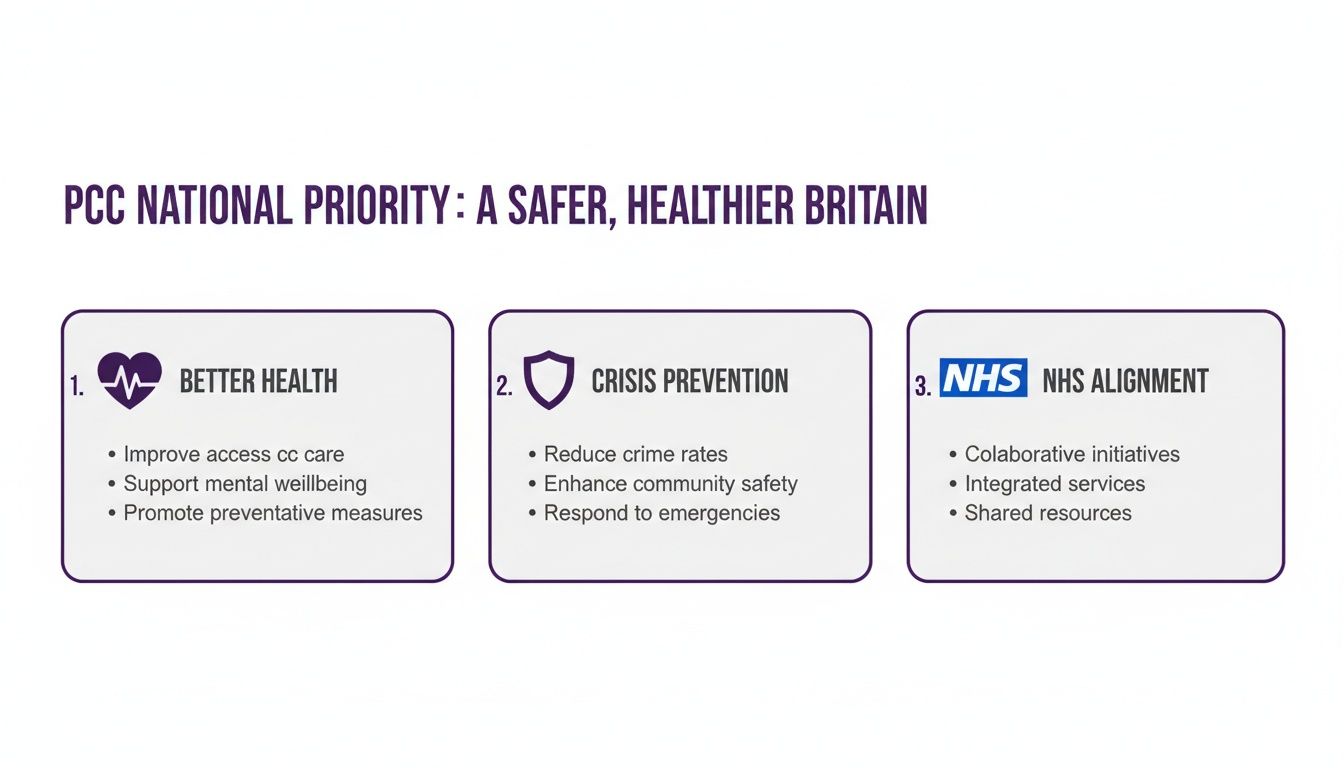
This demonstrates that providers who truly embed person-centred care are not only following best practice but are also actively contributing to better health outcomes and crisis prevention, right in line with NHS goals.
To help you evaluate a provider, we've put together a checklist of what to look for and what to avoid.
Checklist for Identifying Person Centred Care Providers
Use this table as a guide when you visit or speak with a service. The answers you get will give you a clear picture of their underlying culture and approach.
| Area to Evaluate | What to Look For | Red Flags to Avoid |
|---|---|---|
| Care & Support Planning | Plans are detailed, personal, and written in the first person. They contain specific, measurable goals and are reviewed frequently with the individual. | Generic, template-driven plans. Goals are vague ("be more independent") and reviews are rushed or infrequent. |
| Daily Activities & Timetables | The schedule is flexible and clearly built around the choices and goals of different individuals. There’s a mix of group and one-to-one activities. | A rigid, one-size-fits-all timetable where everyone does the same thing at the same time, regardless of personal interest. |
| Staff Attitude & Communication | Staff speak directly to individuals, not about them. They use respectful language and demonstrate active listening. | Staff seem rushed, use jargon, or talk over the individual. They focus on tasks and routines rather than personal connection. |
| Involvement of Family/Carers | Families are treated as genuine partners in care. Communication is proactive, open, and collaborative. Reviews involve everyone. | Communication is poor or only happens when there's a problem. Families feel they have to fight to be heard. |
| Measuring Progress | The provider can show you how they track progress towards goals and celebrate achievements, no matter how small. | There's no clear system for tracking outcomes. The focus is on attendance rather than personal growth and achievement. |
Ultimately, choosing the right service is about finding a true partner in care. You're looking for an organisation that sees the unique potential in every single person and has the structure, skills, and passion to help them achieve it. Trust your instincts—a genuinely person-centred environment feels respectful, empowering, and collaborative from the moment you walk through the door.
At The Grow Project, we build our entire programme around these principles. To see what this looks like day-to-day, you can learn more about our person-centred care services and the specific ways we tailor support to help individuals flourish. By arming yourself with this knowledge, you can confidently choose a provider that will champion independence, respect, and meaningful growth.
The Real-World Impact of a Person-Centred Approach
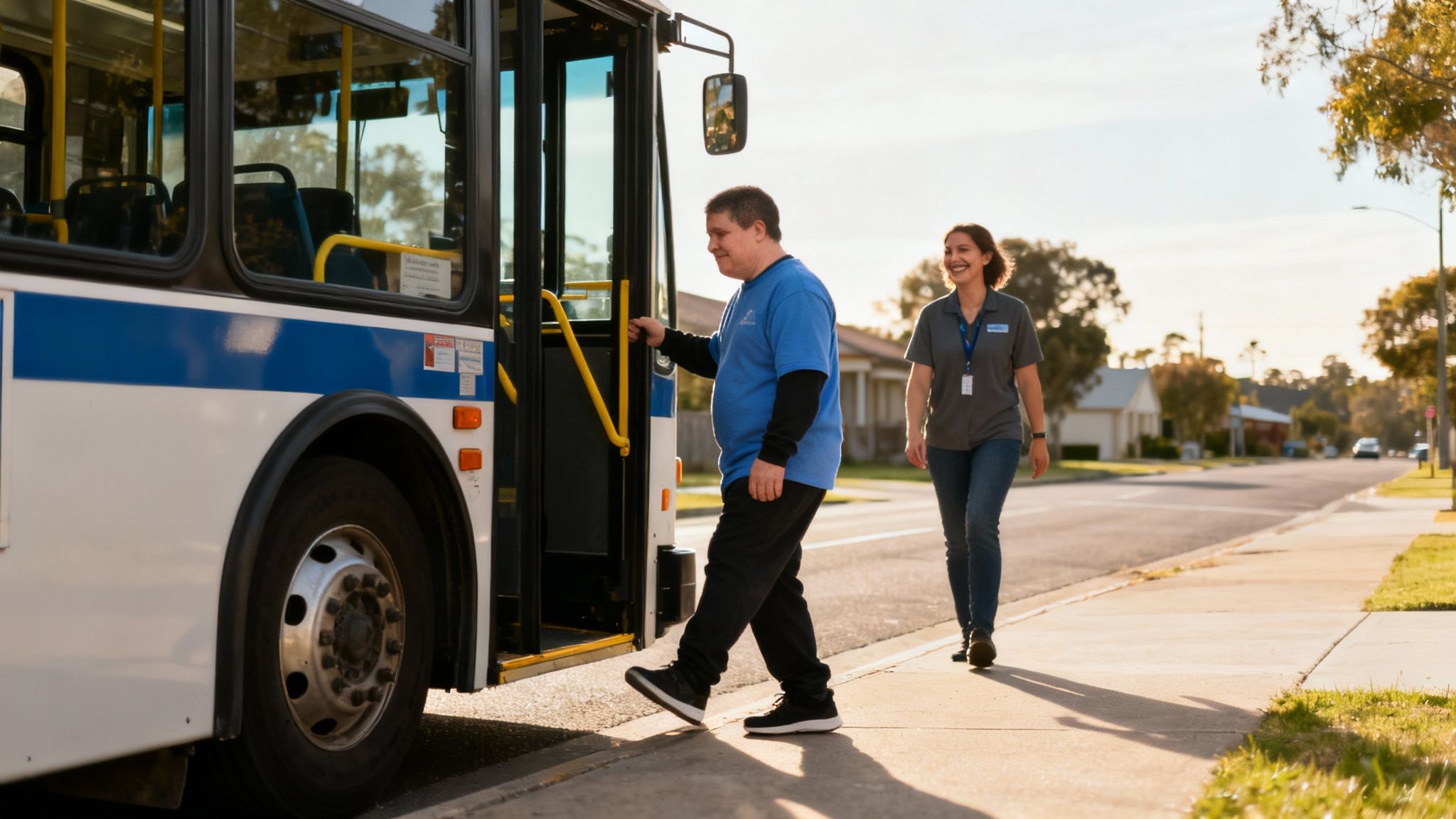
While the philosophy sounds good on paper, its true power comes to life in the tangible results we see every day. This isn't just about making people feel good; it’s about seeing real, measurable progress in their confidence, wellbeing, and ability to navigate the world on their own terms. When support is directly tied to what someone actually wants to achieve, the impact is nothing short of life-changing.
Switching from a service-led to a person-led model creates a powerful ripple effect. When someone feels genuinely heard and has a say in their own support, they become far more engaged and motivated. This naturally leads to a huge reduction in behaviours of concern, because the boredom and frustration that often cause them are replaced with meaningful, fulfilling activities.
Boosting Confidence and Building Life Skills
One of the most powerful outcomes we see is the development of practical life skills. Think about it: when a goal is personally meaningful, the drive to learn and practise is immense. This could be as simple as mastering a new recipe or as brave as gaining the confidence to speak up in a group.
Let's take a common goal: wanting to visit friends independently. With a person-centred plan, everything can be geared towards achieving that single aim. Suddenly, generic outings become purposeful training sessions.
- Practical Skills: Instead of being passively driven somewhere, the person learns to read timetables, handle money for fares, and navigate routes.
- Growing Confidence: Every successful journey, no matter how short, builds self-esteem and proves that their big goal is within reach.
- Community Connection: They become an active and visible member of their community, not just someone being 'cared for' within it.
This focus on practical skills is the key to unlocking genuine independence. Our guide on public transport training for accessing the community shows exactly how these targeted goals can open up a person's world. It’s person-centred care in action.
Measurable Improvements in Wellbeing and Health
The benefits go far beyond social skills. A growing body of evidence shows that a person-centred approach leads to better health outcomes. When people are active partners in their own health and wellbeing, they feel a greater sense of ownership and are more likely to stick with positive changes.
Its importance is so well-recognised that it's now integrated into UK postgraduate medical education. Evidence from the UK and abroad links this approach to better health results, a clearer understanding of risks, and higher rates of medication adherence. This was a key driver behind the NHS Long Term Plan's goal to deliver personalised care to 2.5 million people by 2023/24, a move prompted by a CQC survey of over 76,000 patients. You can find more detail in these person-centred care findings.
This approach is a direct investment in an individual’s long-term success and happiness. By building a plan around what truly matters to a person, we are not just managing their needs for today—we are actively equipping them with the confidence, skills, and resilience to build a more independent and fulfilling tomorrow.
Ultimately, the real-world impact is seen in the small victories that add up to a monumental shift in someone's quality of life. It’s the look of pride after they’ve made their own lunch, the excitement of planning a trip, or the quiet confidence to make a new friend. These aren't just fleeting moments; they are the direct results of an approach that truly sees, respects, and champions the individual.
Navigating the Challenges of Implementation
The theory behind person-centred care is brilliant, but putting it into practice? That's where things can get tricky. Even when everyone has the best of intentions, providers, families, and commissioners often hit real-world roadblocks that can make genuinely personalised support a struggle. The first step to getting over these hurdles is being honest about them.
We have to acknowledge the very real pressures that exist, from squeezed budgets to old organisational habits that are hard to break. It’s a huge cultural shift to move away from a traditional, 'better safe than sorry' model towards one that champions individual choice and personal growth. It takes time, commitment, and some clever, practical strategies to get it right.
Overcoming Systemic Barriers
Often, the biggest challenge is the system itself. Tight funding can mean high staff-to-participant ratios, which makes meaningful one-to-one support feel like a luxury. On top of that, a culture obsessed with eliminating risk can unintentionally crush opportunities for people to learn and grow—the very things person-centred care is meant to encourage.
These issues can feel massive, but there are ways to push back and make progress:
- Advocate for 'Positive Risk-Taking': This is all about changing the conversation around risk. Instead of focusing only on what could go wrong, it shifts the focus to the amazing benefits of trying something new, whether that’s learning to cook a meal independently or travelling somewhere for the first time. A great provider will sit down with the individual and their family to create a plan that manages risks sensibly without taking away the chance to have new experiences.
- Champion Clear Communication: Honest, open dialogue between providers, families, and social workers is the glue that holds everything together. When everyone is on the same page about what an individual wants to achieve, it’s much easier to argue for the right resources and find creative ways around funding or staffing gaps.
- Invest in Staff Training: This is non-negotiable. Staff need more than just basic care skills; they need the confidence to be creative problem-solvers, to listen properly, and to support people in building their own plans. It's about transforming their role from 'carer' to 'enabler'.
The Impact of Wider Pressures on Care
Recent years have really shone a light on the system's weak spots. UK patient surveys show just how much external events can disrupt personalised care. During the pandemic, for example, face-to-face GP appointments in England plummeted from 85% to 48% between 2020-2021. This kind of change can have a huge impact on adults with disabilities who thrive on consistent, in-person communication. While there are efforts to fix this, it shows how easily progress can be undone. You can dig into more UK patient experience trends on cqc.org.uk.
If there's one key takeaway, it's this: implementing person-centred care isn't a box you can tick and forget about. It’s an ongoing commitment that demands constant adjustment, advocacy, and a shared determination to keep the individual’s voice front and centre, no matter what obstacles arise.
Fostering a Truly Person-Centred Culture
At the end of the day, beating these challenges comes down to building a culture that truly lives and breathes person-centred values. This means that every single decision, from who gets hired to how the day is structured, is measured against one simple question: "How does this help the people we support get closer to what matters to them?"
Take technology, for instance. It can be a fantastic tool for independence, but it also opens up new challenges. Balancing the excitement of learning new digital skills with the need to stay safe online is crucial. Our guide on digital inclusion and online safety looks at how to navigate these new risks in a positive, enabling way.
By facing these barriers head-on and working collaboratively, we can build a support system that is strong enough to turn the promise of person-centred care into a daily reality for everyone.
Common Questions About Person-Centred Care
Stepping into the world of adult social care can feel overwhelming, and it’s natural to have questions. Here, we've gathered some of the queries we hear most often from families, carers, and commissioners to give you clear, straightforward answers about what person-centred care really looks like day-to-day.
Isn't This Just Another Name for 'Good Care'?
That's a great question, and it gets to the heart of what makes this approach different. While good care is always the baseline, person-centred care goes a step further by changing the fundamental relationship between the individual and the people supporting them. It's about shifting the power balance.
Instead of professionals making decisions for someone, they work with them as genuine partners. We call this co-production. The focus expands beyond just keeping someone safe and well; it actively embraces their personal goals, celebrates their strengths, and respects their preferences. It’s the difference between simply being looked after and being truly seen and heard.
Is a Person-Centred Plan a Legal Requirement in the UK?
Yes, it absolutely is. The Care Act 2014 in England established a legal duty for local authorities to ensure care and support plans are fundamentally person-centred. This isn't just best practice or a nice-to-have; it's a legal right.
What this means in practice is that any plan created must be built around the person's own assessment of their needs and what they want to achieve. It puts their voice, their goals, and their perspective at the centre of all decisions, giving individuals and their families real legal clout and control over their support.
A person-centred plan isn't just paperwork. It's a legal commitment to uphold an individual’s right to choice and control, making sure their voice is the most powerful one in the room when decisions are being made.
How Do You Stop a Support Plan from Just Sitting on a Shelf?
A support plan should never be a 'one and done' document that gets filed away and forgotten. A genuinely person-centred plan is a living, breathing guide that evolves with the individual. Any quality provider will have a clear process for regular, formal reviews.
These reviews should happen at least once a year, or more often if someone's needs or goals change. Critically, the person themselves—along with their family or advocates—should be leading these conversations. It should feel like a collaborative catch-up, a chance to talk honestly about what's working, what isn't, and what new and exciting things they want to aim for next. This keeps the support relevant, ambitious, and truly in step with the person's life.
At The Grow Project, we see firsthand how a person-centred approach helps people flourish. It’s the foundation of everything we do, empowering adults with disabilities to build skills, grow in confidence, and form genuine friendships. To see how our day service programmes in Southampton and Littlehampton could make a difference, take a look at our work at https://thegrowproject.org.uk.