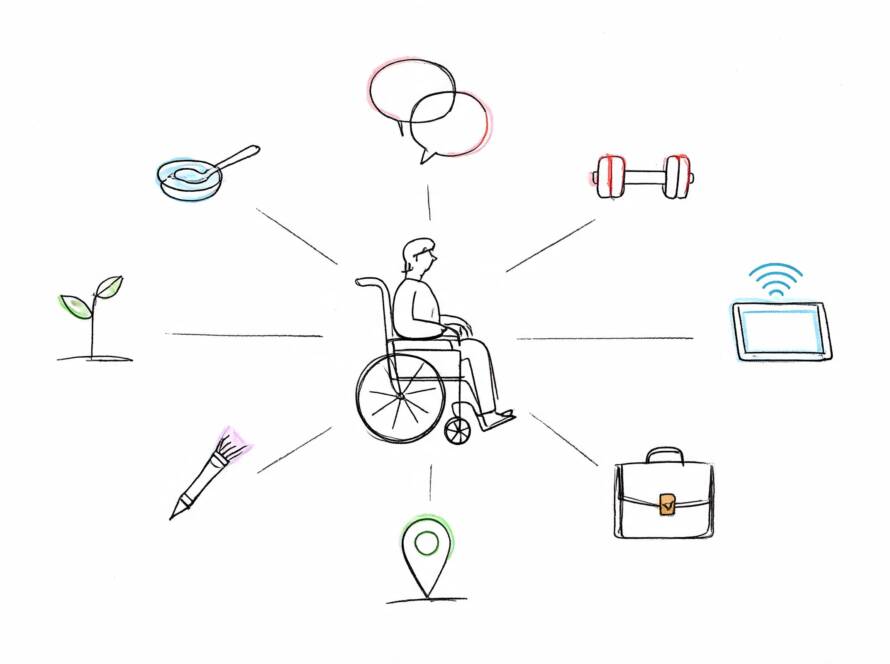
When we support adults with learning disabilities, the goal isn't just to manage their needs. It's about something far more profound: helping them build the life they want for themselves. This all starts with a person-centred approach, putting their goals, preferences, and strengths front and centre in every single decision.
Building a Foundation of Person-Centred Support
Real, effective support isn't about ticking boxes on a rigid care plan. It's a partnership, a process of co-creating a life plan that truly reflects the individual. This way of working, which we call person-centred support, is the absolute bedrock of what we do. It goes beyond clinical checklists to get to the heart of what someone truly wants from their life—whether that’s making new friends, getting a job, or just feeling more comfortable out in their community.
The key is to see the person first, not their disability. We focus on what they can do and what they love doing, rather than getting bogged down by limitations. This strengths-based approach is incredibly powerful for building confidence and paving the way for real, meaningful growth.
For instance, at a place like The Grow Project, someone's love for gardening isn't just seen as a hobby. It's a brilliant opportunity to learn about teamwork, responsibility, and even gain skills for future employment. To see how we put this into practice every day, take a look at our detailed explanation of what is person-centred care.
Championing Individual Strengths and Preferences
Before you can build on someone's strengths, you have to know what they are. A great starting point is often a comprehensive adult learning disability assessment, which provides professional insight that helps shape strategies that will genuinely connect with the individual.
Beyond formal assessments, our day-to-day approach involves:
- Really Listening: This means paying attention not just to what's said, but to body language and behaviour. These non-verbal cues often tell you what truly motivates a person.
- Spotting Their Passions: We look for those activities that spark joy and engagement. These aren't just pastimes; they are powerful tools for developing new skills.
- Making Their Voice the Loudest: When it comes to planning their future, the individual's voice must be the most important one in the room. They have the final say.
This is all part of a fundamental shift in thinking. The table below breaks down the core principles that guide this person-centred philosophy.
Core Principles of Person-Centred Support
| Principle | What It Means in Practice | Example at The Grow Project |
|---|---|---|
| Dignity and Respect | Seeing the person as an individual with unique value, not just a set of needs. Using respectful language and honouring their choices. | We always address participants by their preferred name and ensure conversations about their support happen with them, not about them. |
| Choice and Control | The individual leads the decision-making process about their own life and the support they receive. | A participant chooses which gardening tasks they want to tackle for the day, or whether they'd prefer to focus on a creative project instead. |
| Community Inclusion | Supporting people to be active and valued members of their community, not just recipients of a service. | We organise trips to local garden centres and sell our produce at community markets, creating natural opportunities for social interaction. |
| Strengths-Based Focus | Identifying and building upon what a person is good at and enjoys, rather than focusing on their deficits or what they can't do. | If someone is a brilliant organiser, we might ask them to help sort seeds or plan the planting schedule, building their confidence. |
Ultimately, this way of working ensures that every adult has the right to a life of their own choosing.
It’s a deep-seated commitment to dignity, independence, and inclusion, making sure support is always delivered with a person, never to them.
When we work this way, the entire dynamic changes. It moves from dependency to empowerment. People feel heard, respected, and valued, which makes them far more likely to get involved and work towards the future they’ve helped design for themselves. It gives them a true sense of ownership over their lives and their incredible achievements.
Crafting a Support Plan That Actually Works
Let's be honest, a generic, one-size-fits-all support plan is little more than a box-ticking exercise. It's destined to gather dust on a shelf. To make a real, lasting difference, a support plan needs to be a living, breathing document that’s co-created with the person it’s for. It has to reflect their unique passions, their strengths, and their vision for their own life.
This means we have to go far beyond a simple needs assessment. It's about asking better questions. Instead of just asking, "What support do you need?", we need to dig deeper: "What do you love to do?" and "What would you really like to achieve?" The answers to these questions are pure gold – they reveal the true motivators that will fuel progress and make the plan feel genuinely theirs.
From Big Dreams to Actionable Goals
Once you have a sense of someone's aspirations, the real work begins: breaking them down into clear, manageable steps. This is where setting SMART goals is an absolute game-changer. This simple framework helps turn vague dreams into a concrete plan, making sure everyone involved knows exactly where they're going and how they'll get there.
Take a young person transitioning from college who says their goal is "to be more independent." It's a fantastic starting point, but it's far too broad to act on. Using the SMART framework, we can work together to bring it into sharp focus.
- Specific: I want to learn to take the bus to The Grow Project on my own.
- Measurable: I’ll start by doing it once a week with support, then twice, aiming for five days a week independently within three months.
- Achievable: I already know the route and feel comfortable travelling with a support worker, so taking the next step feels realistic.
- Relevant: This helps me get to a place I enjoy and is a huge step towards my bigger goal of being more independent.
- Time-bound: My target is to be travelling on my own by the end of this term.
This approach transforms a massive, intimidating idea into a series of small wins. It builds confidence with every successful journey. It’s exactly how we support someone in learning a new recipe, mastering a bus route, or building the skills they need for a job.
The Power of Working Together
A support plan created in a vacuum will always fall short. The most effective plans come from a true team effort that places the individual firmly in the driver's seat. This team should always include the person themselves, their family or carers, and any professionals in their support network.
Everyone brings something vital to the table. The individual knows their own hopes and fears, family members offer deep personal insight, and professionals can suggest resources and strategies. When everyone contributes, the final plan is richer, more robust, and has the buy-in of the entire team. This co-creation means the plan is owned by everyone, not just imposed on someone.
A truly person-centred plan isn't something you do for someone; it's a journey you embark on with them. It honours their voice and empowers them to be the chief architect of their own life.
This collaborative process is guided by a few core principles, as shown below.
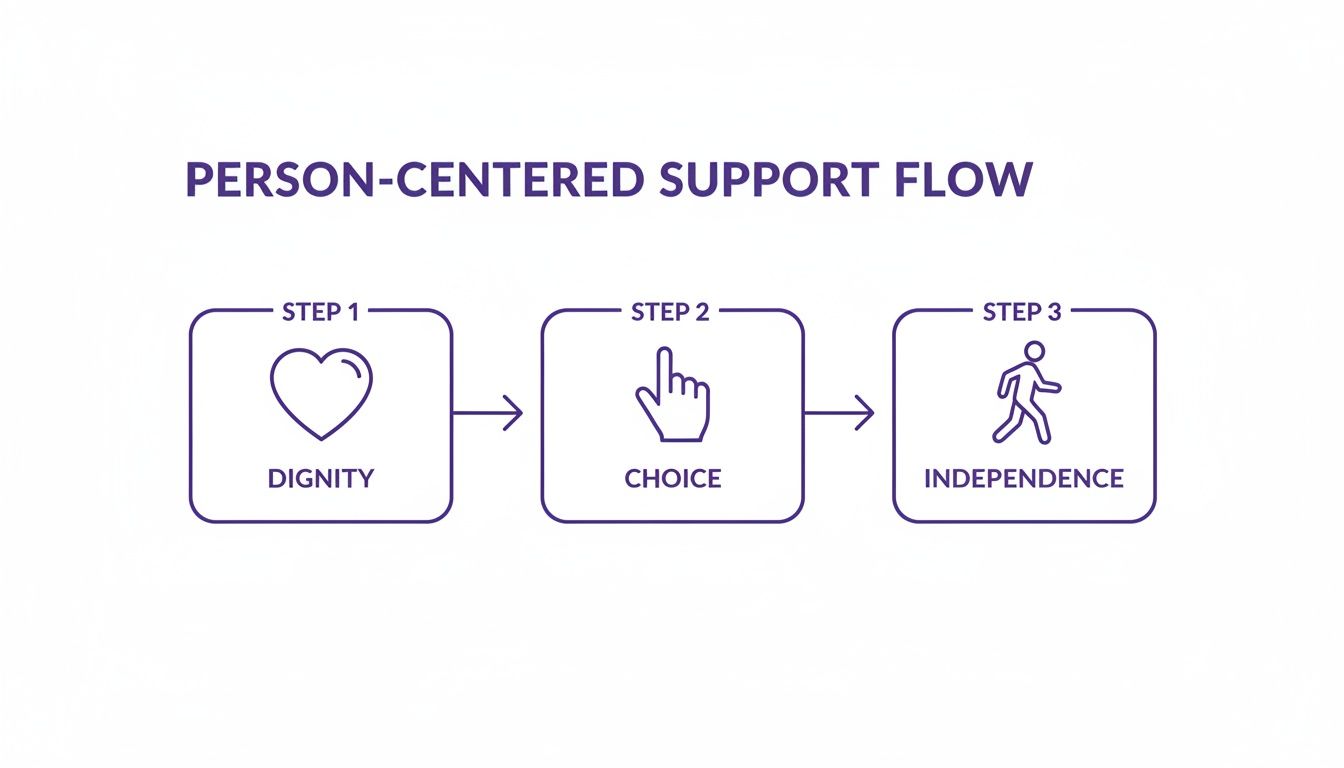
As the flow shows, respecting a person's dignity is the foundation. From there, we can offer meaningful choices, which is the path to achieving greater independence.
Keeping the Plan Alive and Relevant
Life changes. People's goals shift, skills develop, and new interests spark. That's why a support plan can't be a "set it and forget it" document. Regular reviews are absolutely essential to make sure the plan stays relevant and continues to challenge and inspire.
These reviews are a chance to celebrate every success, no matter how small. Acknowledging progress is a powerful motivator. They are also a time to be honest about what isn't working so you can adjust the approach. Maybe a goal was a bit too ambitious for now, or perhaps a new barrier has popped up.
By treating the support plan as a dynamic guide rather than a fixed set of rules, you create a responsive and effective tool for growth. This ongoing conversation ensures the support you provide always aligns with the person's current dreams and abilities, helping them move consistently towards a more fulfilling and independent life.
Getting Communication and Sensory Needs Right
Effective support isn't just about the tasks you do; it’s about how you connect and the world you create around someone. Building a positive, productive relationship is the bedrock of helping an adult with a learning disability to thrive. This means we have to be really thoughtful about how we talk, listen, and even how the room feels, sounds, and looks.
First things first, let's look at our own communication style. It's easy to fall into old habits, but using clear, simple language makes a world of difference. Ditch the jargon and metaphors—stick to direct, straightforward sentences. I've found it’s always best to give just one piece of information at a time. It prevents that feeling of being swamped and gives the person time to process what you’ve said.
And communication is a two-way street. Active listening is one of the most powerful skills you can develop. It’s more than just hearing words; it’s about giving someone your undivided attention, letting them finish their thoughts without jumping in, and paying close attention to their body language. Often, what isn't said is just as important as what is.

Finding the Right Way to Talk
Verbal chat isn't the only way to communicate, and for many, it's not even the preferred way. A huge part of person-centred support is recognising and embracing Alternative and Augmentative Communication (AAC) methods.
There are lots of different tools we can use:
- Visual Supports: Think pictures, symbols, or even physical objects. A visual timetable showing the day's plan can be incredibly calming, as it makes routines clear and predictable, massively reducing anxiety.
- Makaton or Sign Language: These systems use signs and symbols alongside speech, which can really help cement understanding for both the speaker and the listener.
- Communication Aids: This is a broad category, covering everything from simple picture exchange (PECS) cards to high-tech, speech-generating apps on a tablet.
The real goal here is to find the best fit for the individual, giving them a voice to express their needs, wants, and opinions. This can also open up new opportunities, which we touch on in our guide about digital inclusion, boundaries, and safety, where technology often provides a brilliant bridge to communication.
Supporting communication is about opening as many doors as possible. It’s about valuing every attempt to connect, whether it's through a word, a sign, a picture, or a gesture, and responding with patience and respect.
Creating Calm and Supportive Environments
Just as crucial as how we communicate is where we communicate. The sensory environment—everything a person sees, hears, smells, and feels—can make or break their day. For many adults with learning disabilities, everyday stimuli can quickly become overwhelming, so we need to become "sensory detectives" to spot what might be causing distress.
A calm environment doesn’t happen by accident; it’s about making conscious, thoughtful adjustments.
Small Tweaks, Big Impact
You'd be surprised what a difference small changes can make in managing sensory input and creating a more comfortable space.
Take a busy kitchen, like the one we have at The Grow Project. For someone with auditory sensitivity, the clatter of pans, the drone of an extractor fan, and several conversations happening at once can be a real nightmare.
But we can make simple adaptations:
- Offer noise-cancelling headphones.
- Plan cooking activities for quieter times of the day if possible.
- Use a visual timer instead of a jarring alarm.
- Have a designated quiet corner nearby where someone can retreat for a few minutes if they feel overwhelmed.
It’s the same for visual sensitivity. A room that's too bright or cluttered can feel chaotic and distracting. Simple fixes like using dimmer lighting, organising things into clearly labelled, plain-coloured boxes, and keeping work surfaces clear can have a profound effect.
By really tuning into someone's unique communication style and sensory needs, we move beyond just managing challenging situations. We start building environments where adults with learning disabilities feel truly heard, safe, and ready to engage with the world on their own terms.
Developing Skills for Independence and Employment
When we talk about truly supporting adults with learning disabilities, it's about much more than just day-to-day care. It’s about building confidence and practical skills that pave the way for a more independent life. The aim is to give people the tools they need to navigate the world on their own terms, focusing on daily living, getting out into the community, and finding meaningful work.
The best way to do this? Hands-on, practical activities. Abstract lessons just don't stick in the same way as learning by doing. For instance, instead of simply talking about healthy eating, we’ll get a small group to plan a meal, walk to the local shop to buy the ingredients, and then cook it together from scratch. Suddenly, one task becomes a rich learning experience covering budgeting, social skills, and how to use a kitchen safely.
This principle works for everything, from managing money to figuring out a bus route. Every small success builds on the last, creating a powerful sense of achievement that keeps people motivated. It's all about breaking down those big, intimidating goals into small, manageable steps.

Cultivating Everyday Life Skills
Independence really does start at home. Getting to grips with core daily living skills is a massive boost for self-esteem and is the foundation for getting more involved in the wider community.
We focus our efforts on three key areas:
- Food Prep and Healthy Habits: This is everything from basic kitchen hygiene and safety to following a recipe, using equipment properly, and understanding a bit about nutrition. The goal is building the confidence to make simple, healthy meals without support.
- Budgeting and Money Management: Handling money can be a real source of anxiety. We start with the basics, like telling coins and notes apart, before moving on to simple budgeting, understanding bills, and making purchases in a shop. You can find out more in our guide to employability and money skills.
- Household Responsibilities: Learning to look after a living space – cleaning, doing the laundry, keeping things tidy – fosters a real sense of pride and ownership.
Consistency is everything. If someone is learning to make their bed with us, it’s brilliant if that routine is encouraged at home too. That repetition is what helps a new skill become a natural part of daily life.
Mastering Travel and Community Access
Being able to get out and about on your own is a game-changer. It unlocks social, recreational, and work opportunities that would otherwise be out of reach. Travel training is a carefully structured process that takes a person from guided journeys to travelling solo with confidence.
It’s always gradual and completely personalised. We start by picking a useful, motivating route, like the journey to a friend's house or the local cinema. We then break it down into stages: planning the route, reading timetables, road safety, and knowing what to do if a bus doesn't show up. A support worker will go along for the first few trips, gradually stepping back as the person’s confidence grows.
True independence isn't just knowing which bus to get; it's having the confidence and problem-solving skills to handle the unexpected and feel safe doing it. That's why we spend a lot of time role-playing different scenarios.
Bridging the Employment Gap
Creating genuine pathways into work is one of a support service’s most important jobs. A job isn’t just about money; it brings routine, social connection, and a huge sense of purpose. But in the UK, the reality is stark.
There are around 1.5 million people in the UK with a learning disability, yet a shocking 6.6% of working-age adults are in paid employment. This figure highlights the huge gap that targeted support needs to address. It shows just how difficult the jump from education to the workplace can be, as you can read more about in this article on the barriers to employment for people with learning disabilities from crowncounseling.com.
To tackle this, employability training has to be practical and tailored. We focus on developing core work skills in a safe, supportive environment.
This often includes things like:
- Punctuality and Timekeeping: Understanding why it's important to be on time and how to manage break times.
- Teamwork and Communication: Learning to work with others, follow instructions, and, crucially, ask for help when you need it.
- Task Management: Practising how to see a task through from beginning to end with a focus on quality.
Our social enterprise activities, like selling the produce we grow in our gardens, give people that all-important real-world experience. They learn about customer service, handling money, and the pride that comes from seeing their hard work valued. These experiences don't just build a CV; they build the self-belief needed to take that next step into the workplace.
Prioritising Health, Wellbeing, and Safeguarding
You can have the best skills plan in the world, but if someone doesn't feel well or safe, it's all for nothing. Their ability to learn, engage, and simply enjoy life gets put on hold. That’s why we see health, wellbeing, and safeguarding not as extras, but as the absolute bedrock of everything we do.
For adults with learning disabilities, getting the right healthcare isn't always straightforward. They often face barriers that others don't, which makes a proactive approach essential. It’s about more than just reacting to problems; it's about spotting issues early and building a foundation for a healthy, secure life.
The Importance of Proactive Healthcare
One of the best tools we have in the UK is the free annual health check offered by the NHS for adults with a learning disability. This yearly appointment is brilliant. It’s a dedicated time to build a good relationship with a GP, talk through any worries without being rushed, and keep on top of things like vaccinations and important screenings.
Often, these check-ups lead to a Health Action Plan. This isn't some complicated medical document; it's a straightforward plan outlining what someone can do to stay healthy. It might be as simple as eating more fruit or joining a local walking group, but it turns a doctor's advice into real, achievable goals.
And it works. The latest figures from NHS England show that by March 2025, an incredible 79.9% of people on GP learning disability registers had their annual health check. Better still, 77.8% of them left with a health action plan, showing just how many people are getting practical support to take charge of their own wellbeing. You can dig into the full findings of the Learning Disability and Autism Programme if you're interested.
Nurturing Mental and Physical Wellbeing
Wellbeing is so much more than just not being ill. It's about feeling connected, having a purpose, and genuinely feeling good. Community services are vital here, offering activities that boost both body and mind in a fun, social atmosphere.
We see the power of this every single day at The Grow Project. Our timetable is packed with things designed to do just that:
- Getting Active: Whether it’s getting your hands dirty in the garden or joining a fitness class, moving your body is a fantastic stress-buster and a real confidence-builder. You can find out more about our take on physical activity and fitness.
- Healthy Eating Workshops: Our cooking sessions are about more than just recipes. They’re a fun, hands-on way to learn about nutrition and making healthy choices feel easy.
- Creative Therapies: Sometimes, the best way to express yourself is through art. Activities like painting and crafts are wonderfully calming and can make a real difference in reducing anxiety.
Safeguarding and Building Positive Relationships
Safeguarding is a responsibility we all share. It means actively protecting a person’s right to live safely, free from abuse and neglect. A huge part of this is simply being observant and knowing the signs that something isn’t right.
Safeguarding isn’t just about reacting to harm. It’s about creating an open, trusting environment where people feel safe enough to speak up if they’re worried or unhappy.
It’s so important to recognise the warning signs, which might include unexplained injuries, sudden changes in behaviour, or someone becoming withdrawn. If you ever have a concern, you must report it to your local authority's adult social services. You don't need proof; a gut feeling is enough.
A key part of safeguarding is also being proactive with education. We can teach essential life skills in a supportive setting, helping people to protect themselves. This includes:
- Understanding Personal Boundaries: Helping people recognise what feels comfortable in their interactions with others—and what doesn’t.
- Fostering Healthy Relationships: Talking about what makes a good friend and how to spot behaviour that is unkind or unsafe.
- Staying Safe Online: Offering practical guidance on using social media and the internet without putting themselves at risk.
Securing the right resources can make a huge difference in someone's autonomy and safety. Looking into options like grants for people with disabilities can be a game-changer. This kind of financial support can open doors to new programmes and tools that reinforce the skills learned and build greater independence.
Building a Support Circle: Working Together for Real Results
Let's be honest: no single person can be everything to someone with a learning disability. Meaningful, lasting support isn't a one-person job. It’s a genuine team effort, a partnership that brings together everyone who plays a role in that person's life. This strong, collaborative network is the foundation that gives an individual the confidence to try new things and grow.
Think of it as building a support circle. This means actively working with family members, carers, social workers, and other community groups. Each person brings something vital to the table. Families and carers, for example, often have an incredible depth of knowledge about the person's history, their little quirks, and how they best communicate. This kind of insight is pure gold for day-to-day support.
At the same time, professionals like social workers or occupational therapists bring their specific expertise and a wider knowledge of available resources. The magic happens when you bring all these perspectives together into a single, cohesive plan. Most importantly, the person themselves must be the loudest voice in the room. This stops anyone from getting their wires crossed and ensures the individual isn't getting confusing, mixed messages.
Keeping the Conversation Going
Great teamwork relies on great communication. It’s that simple. We need to build an environment where everyone feels they can share wins, flag concerns, or chuck an idea into the mix without being judged. This spirit of open dialogue is what gets you through the tough days and makes celebrating the successes so much sweeter.
So, how do you make this happen in practice?
- Regular catch-ups: Set aside time for regular meetings, even if they're just quick check-ins. It keeps everyone on the same page about progress and goals.
- A shared logbook: A simple notebook or a shared digital doc is a brilliant way to track key updates, appointments, and little observations that everyone can see.
- Know who to call: Make sure everyone is clear on who the main point of contact is for different things (like health, activities, or housing). It just makes sorting out problems so much quicker.
This joined-up approach isn't just a nice idea; it gets real results. Strong community support is one of the main reasons we've seen a huge drop in the number of people with learning disabilities stuck in mental health hospitals. In fact, NHS England data from July 2025 revealed a massive 59% reduction since March 2015, with the number falling from 2,295 to just 935. You can dig deeper into these important learning disability services statistics on the government website.
Always Putting the Person First
With all the different people, plans, and conversations, it's easy to lose sight of what's most important. We have to constantly remind ourselves who all this work is for. The person with the learning disability must always, always be at the centre of every decision made. Their goals, their feelings, and their choices are what should steer the ship.
True collaboration isn’t about professionals and families making decisions for someone. It’s about creating a circle of support that empowers the individual to make their own decisions, giving them the right tools and encouragement to do so.
When everyone pulls together with this shared focus, the impact is incredible. A truly cohesive support network provides a consistent and reassuring environment where an adult with a learning disability doesn't just get by—they get the chance to really shine and thrive.
Your Questions Answered
We often get asked similar questions by families and carers who are navigating the best ways to support an adult with a learning disability. Here are some of our thoughts on the most common ones.
How Can We Encourage Independence Without Taking Unnecessary Risks?
This is a real tightrope walk, and it's something every family thinks about. The key is to see independence as a journey, not a destination. You don't go from zero to one hundred overnight.
Start small. Think about a familiar bus route. The first step might be travelling it together, then with you sitting a few rows away, and eventually, them doing it solo while you wait at the destination. It’s all about building confidence in manageable, safe increments. We use tools like visual timetables and even role-playing different situations at The Grow Project, which can make a huge difference in preparing someone for a new challenge.
The goal is to gradually fade into the background, letting their confidence grow. Always have a clear 'what if' plan in place, like who to call if they get lost, so everyone feels secure.
What Is the First Step in Creating a Person-Centred Support Plan?
Before you even think about plans or goals, just listen. The very first step is a conversation. Sit down with the person, and perhaps with family or carers who know them inside out, and just talk about what makes them tick. What do they love doing? What are they brilliant at? What do they dream about for their future?
This isn't about ticking boxes; it's about seeing the whole person, not just the disability. When you start from a place of genuine understanding of their passions and aspirations, the plan that follows will feel authentic and motivating to them. It becomes their plan, not just something that's been created for them.
How Do I Find the Right Day Service?
Choosing the right service can feel daunting, but your gut instinct is a great guide. When you visit a potential place, look beyond the shiny brochure.
- Observe the atmosphere: Does it feel warm and welcoming? Are people engaged and happy, or just passing the time?
- Ask about personalisation: How do they adapt activities for different people? A one-size-fits-all approach is a red flag.
- Look at the team: What's the staff-to-participant ratio like? Do the staff seem genuinely invested?
- Check the connections: A quality service will have strong links with local authorities, like Hampshire or West Sussex councils, which shows a level of accountability and integration within the community.
A great service should offer a good mix of activities—some focused on practical life skills, some on creativity, and others on getting out and about. Ultimately, you're looking for a place where the individual will feel safe, valued, and excited to go.
At The Grow Project, our entire approach is built on creating a safe, welcoming space for adults with learning disabilities to build confidence, make friends, and develop their independence. If you'd like to see our person-centred philosophy in action, learn more about us at https://thegrowproject.org.uk.