Think of a modern learning disability day centre, and you might picture something quite traditional. The reality, however, has evolved into something far more dynamic. It’s less about simple day-to-day care and much more like a specialist college campus for life, where the focus is firmly on building confidence, fostering friendships, and developing real-world skills.
What a Modern Day Centre Truly Offers

The phrase "day centre" can sometimes bring to mind an outdated, passive environment. But the best services today have completely flipped that idea on its head. A modern centre is a vibrant, bustling space dedicated to personal growth, independence, and genuine community connection.
At its heart is the principle of person-centred support. This means that instead of a one-size-fits-all approach, everything is built around an individual’s personal interests, their unique strengths, and what they want to achieve. It’s a huge shift from simply filling time to actively building a more meaningful and fulfilling life. The entire atmosphere is designed to feel safe and welcoming, giving adults the foundation they need to explore new activities and step outside their comfort zones with expert support right there with them.
A Focus on Growth and Skills
The real purpose of a forward-thinking day centre is to empower people. It offers a structured yet flexible timetable packed with meaningful activities designed to develop practical, everyday abilities. It's best to think of it as a launchpad for greater independence.
These centres provide comprehensive support, often including structured learning programs for adults that are carefully adapted to what each person needs. This approach helps individuals see and feel real progress in the areas that matter most to them.
Key goals nearly always include:
- Building Life Skills: From cooking a meal and managing a budget to navigating public transport, the focus is on mastering practical skills for daily life.
- Boosting Confidence: Having the chance to try new things in a supportive group helps people discover just what they're capable of, which is fantastic for self-esteem.
- Fostering Social Connections: The centre acts as a vital community hub where real, lasting friendships are made, directly tackling the challenge of social isolation.
- Improving Wellbeing: Taking part in regular physical and creative activities is brilliant for promoting both mental and physical health.
The table below shows just how different this modern approach is compared to older, more traditional models of care.
Modern Day Centre vs Traditional Service Models
| Feature | Modern Day Centre (e.g., The Grow Project) | Traditional Service Model |
|---|---|---|
| Primary Goal | Empowerment, skill-building, and independence. | Basic care, supervision, and occupying time. |
| Approach | Person-centred: activities are tailored to individual goals and interests. | Programme-centred: individuals fit into a fixed schedule of activities. |
| Atmosphere | Active, collaborative, and engaging. Like a community hub or college. | Often passive and custodial, with limited individual choice. |
| Outcomes | Increased confidence, measurable life skills, and strong social networks. | Maintaining a basic routine with limited personal development. |
| Community Link | Strong focus on community integration, travel training, and real-world experience. | Often insular, with activities contained entirely within the building. |
This evolution is what makes centres like The Grow Project so essential, offering a model that genuinely prepares people for a more independent future.
The Changing Landscape of Support
Day centres have always been a cornerstone of community care. In fact, a major study back in 2003/4 found that 39% of all people with learning disabilities in England were attending one.
Worryingly, recent trends have shown a decline in these kinds of building-based services across the UK. Many families have reported closures, reduced hours, and higher fees, which has sadly pushed many people back into isolation. The full evidence review highlights the scale of this challenge.
This situation makes high-quality, dependable centres like The Grow Project more crucial than ever before. By providing a stable, enriching, and forward-looking environment, they offer a vital lifeline that champions personal growth and community connection. You can learn more about our person-centred care services and see how they are built around the needs of each individual we support.
A Look Inside a Typical Day

When you walk into a modern learning disability day centre, you’ll find a place that’s buzzing with energy and purpose. It’s a common misconception that these are just places to pass the time. In reality, a typical day is structured and filled with carefully planned sessions, all designed to build skills, boost confidence, and foster genuine friendships.
The morning usually starts with a warm welcome. This gives everyone a chance to settle in, catch up with friends over a cuppa, and get ready for the day. This gentle start is so important for building a sense of community and establishing a comfortable routine. From there, the day unfolds into different sessions, each with its own clear goal.
At a place like The Grow Project, we make sure the timetable is varied and engaging, so every day brings something new to the table. Our whole philosophy is built on the idea that every activity, no matter how small it seems, is a vital step towards greater independence and wellbeing.
Building Skills for Everyday Life
A huge part of what we do revolves around developing practical life skills. These are the core abilities that truly empower adults to live more independently. Forget boring lectures; our sessions are interactive, hands-on, and always carried out in a friendly group setting where everyone feels supported.
The focus is squarely on real-world skills you can actually use. A session on food preparation, for instance, is so much more than just following a recipe. It’s an entire experience that covers:
- Healthy Eating: Getting to grips with what makes a balanced meal and how to make nutritious choices.
- Budgeting Skills: Figuring out the cost of ingredients and planning meals that don’t break the bank.
- Kitchen Safety: Learning to use kitchen equipment safely and confidently, and understanding food hygiene.
- Teamwork: Working together with others to prepare and, best of all, share a meal.
These sessions are always a big hit because you get to see—and taste—the delicious results of your work! Learning about food, cooking, and healthy habits this way makes the skills stick. We apply this same practical approach to everything from money management workshops to digital skills training, where we cover everything from online safety to using helpful apps.
The goal is to break down complex tasks into manageable steps, transforming challenges into achievements. Each small success, whether it's correctly measuring ingredients or paying for shopping, builds a foundation of confidence that carries over into all aspects of life.
Fostering Confidence and Community Connection
Beyond practical skills, a great day centre helps people build the social confidence they need to feel part of their wider community. This is where sessions on employability, travel training, and relationship education really shine.
An employability workshop might involve role-playing a job interview or tackling a small team project. The aim isn’t always to land a full-time job; it’s about building the self-assurance and communication skills that are valuable in any situation. It's about helping people discover what they’re capable of and finding a sense of purpose.
Activities often take us out and about, beyond the four walls of the centre. A typical week could easily include:
- Public Transport Training: Guided trips on local buses or trains to get comfortable with routes, timetables, and buying tickets.
- Community Outings: Visits to local parks, libraries, or cafés, which are fantastic real-life opportunities to practise social and money skills.
- Relationship Education: Safe, structured chats about building healthy friendships, reading social cues, and setting personal boundaries.
Every single one of these activities is thoughtfully planned and led by our skilled staff. They weave everything together into a complete programme where what you learn in one session reinforces skills used in another. For example, a cooking workshop might lead to a community outing to a supermarket, which in turn uses the skills from travel training and budgeting. This joined-up approach ensures learning is consistent, practical, and directly linked to living a more independent life.
The Real-World Impact on Independence
The structured activities at a learning disability day centre aren't just things to fill a schedule. They’re the very building blocks for a more independent life. This is where the skills people learn in workshops and training sessions start to show up in the real world, creating tangible results that make a genuine difference.
Every small win, whether it’s navigating a bus route alone for the first time or cooking a meal for friends, builds a powerful sense of self-worth and capability. It’s one thing to practise a skill in a familiar, supported space; it's something else entirely to use it confidently out in the community. That’s where the magic really happens.
From Small Steps to Giant Leaps
With consistent, skilled guidance, people can make real, measurable progress towards their own personal goals. It’s never about forcing everyone down the same path. Instead, it’s about providing the right support at the right moment to help each person take their next step, whatever that might look like for them.
Just think about these examples, inspired by the people we support here at The Grow Project:
Learning to Travel Independently: One young man was determined to visit his grandparents on his own. After weeks of dedicated training, he went from guided journeys with our staff to planning the route and travelling the whole way by himself. This wasn't just about catching a bus; it was about gaining freedom, confidence, and a stronger connection with his family. You can see why our public transport training is so important.
Gaining Valuable Work Experience: A young woman who was usually quite shy discovered she had a real talent for organisation. She started helping out with our social enterprise, taking inventory and preparing orders. This role gave her a profound sense of responsibility and purpose, and the communication skills she developed have been a massive boost in all areas of her life.
Forming Lasting Friendships: For so many people, the centre is the first place they’ve been able to build genuine friendships. We’ve watched individuals who once felt completely isolated become the heart and soul of their social group, organising meetups and supporting each other inside and outside of our doors. These connections are absolutely vital for wellbeing.
A Vital Preventative Service
Looking at the bigger picture, day centres are a crucial preventative service for the whole community. Social isolation is a huge risk factor for both mental and physical health decline among adults with learning disabilities. A well-run day centre tackles this head-on by providing a safe, engaging, and social environment.
This proactive support is essential. By offering routine, purpose, and a strong support network, centres reduce the likelihood of someone reaching a crisis point, which in turn lessens the need for more intensive and costly interventions later on. They are a true investment in long-term wellbeing, helping people to stay healthy, active, and integrated in their local areas.
A learning disability day centre is more than a place to go; it's a community that actively prevents isolation. By fostering skills and connections, it helps avert crises and reduces the strain on more acute health and social care services.
This preventative role has a real, measurable effect. The NHS has successfully reduced the number of inpatients with learning disabilities in mental health settings by 29% since 2015, bringing the number down from 2,910 to 2,065. That’s great progress, but it still falls short of the 50% target, with many people remaining in hospital for far too long. Community-based services like The Grow Project are a key part of the solution, building the confidence and skills that reduce reliance on inpatient care. Discover more insights about these NHS statistics on england.nhs.uk.
How to Fund and Access a Day Centre Placement
Finding and funding a place at a learning disability day centre can feel a bit like navigating a maze. But once you understand the key steps and how the money side of things works, it becomes much clearer, putting you in a much better position to secure the right support. The whole process is designed to be person-centred, which just means it's all about making sure the final placement truly fits an individual's needs and what they want out of life.
The journey almost always kicks off with a needs assessment from your local council’s adult social care team. This is a vital first step. A social worker or a trained assessor will sit down with you and your loved one to get a real picture of their support needs, what they enjoy, and what their goals are. It’s this assessment that officially determines if they’re eligible for care and support services.
Understanding the Main Funding Routes
Once eligibility is confirmed, the conversation naturally turns to funding. In the UK, there are generally three ways a placement at a day centre like The Grow Project can be paid for. Each one offers a different level of control over how the support is managed.
Your local authority will also carry out a financial assessment to see if you need to contribute towards the cost of care. Whatever the outcome, the main funding options stay the same:
- Direct Payments: The council gives the allocated funds straight to you or your loved one. This gives you the most control, letting you choose the services you want and pay providers directly.
- Personal Budgets (Council-Managed): With this option, the council holds onto the funds for you and sorts out the services agreed in your support plan. It’s a good choice if you’d rather not handle the financial admin yourself.
- A Combination of Both: It's also perfectly possible to have a bit of both. You could manage part of the budget with direct payments while the council looks after the rest.
This flowchart can help you think through some of the key questions when you’re trying to figure out if a centre is the right choice.
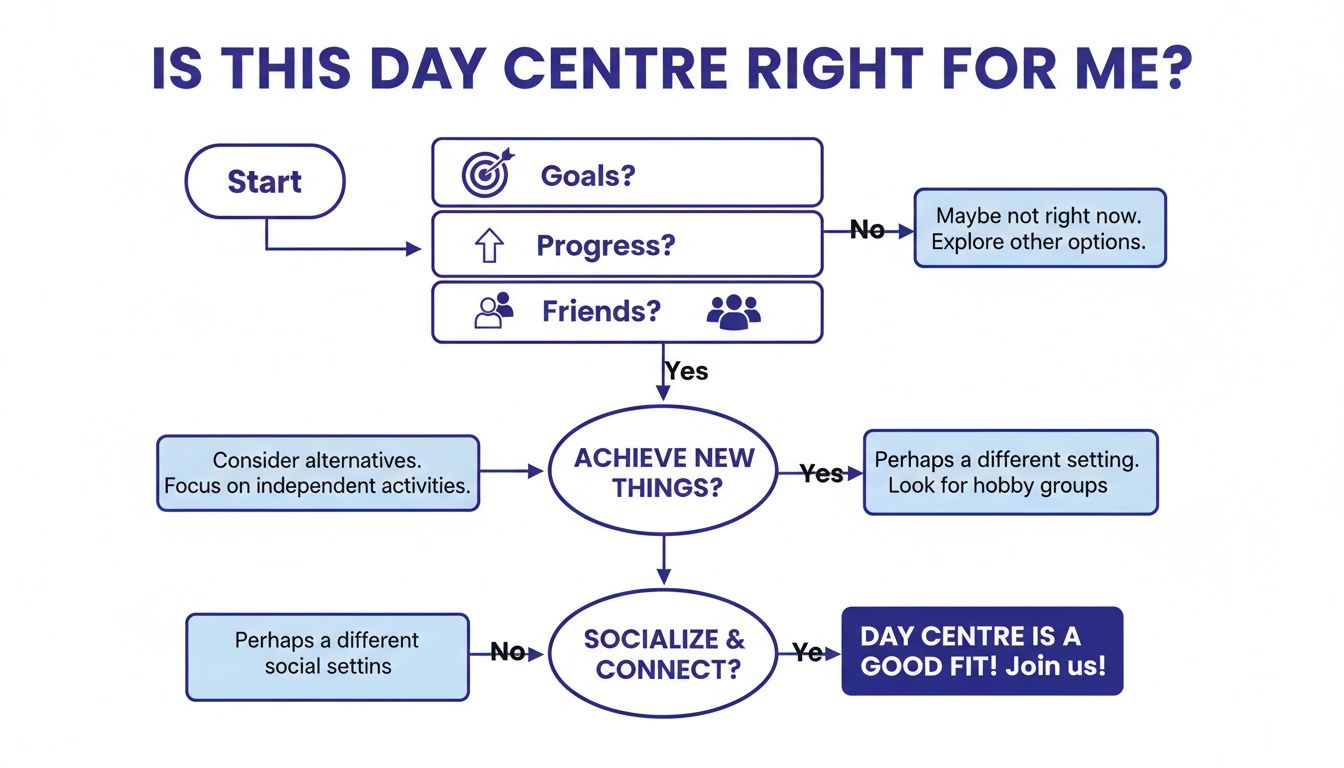
As the chart shows, a good decision really comes down to whether a centre’s activities align with personal goals, offer real opportunities for progress, and provide a chance to build friendships.
Working with Professionals and Making a Referral
Working closely with social workers and transition teams is crucial, especially for a young person leaving education. Think of these professionals as your guides and advocates; they’re there to help you explore options and handle the paperwork. Be as open as you can about what your loved one wants to achieve and what a great environment looks like for them.
It's no secret that the demand for adult social care is on the rise. Projections showed annual costs could climb from £4.8 billion to £6.7 billion by 2025, an increase driven by over 7,600 more adults needing support. This financial pressure on councils makes the clear, structured support that day centres provide an absolutely essential part of the care system.
Advocating for your loved one is about ensuring their support plan isn't just about meeting needs—it's about fuelling their ambitions. Ask questions, share examples of what works well for them, and don’t be afraid to clearly state what you believe is the best path for their future.
Once you’ve found a centre that feels like a brilliant fit, the final step is making the referral. This is usually done by a social worker, but you can also refer someone yourself. Here at The Grow Project, for example, we make it easy for families to start the conversation directly with us. You can take the first step right now by exploring https://thegrowproject.org.uk/referral-form/.
For anyone interested in the wider world of funding—perhaps for day centres themselves—this complete guide on how to get grants for nonprofits offers a fantastic look into the mechanisms that keep vital community services going.
Choosing the Right Centre for Your Family
Making the decision about which learning disability day centre to choose is a big one. It's about so much more than logistics or location; it’s about finding a place where the person you care for can truly thrive, feel valued, and be themselves. Getting this right is everything, so taking the time to properly explore your options will give you the peace of mind that you're making a brilliant choice.
The first, most crucial step is to go and see the place for yourself. A glossy brochure or a slick website can tell you one story, but nothing beats the feeling you get when you walk through the door. What’s the atmosphere like? Does it feel warm, energetic, and welcoming? Look around—are people genuinely enjoying themselves and connecting with each other? That buzz of positive energy is often the clearest sign of a happy and well-run centre.
Pay close attention to how the staff interact with the people they’re supporting. Are their conversations respectful and patient? You can quickly get a sense of whether they truly know the individuals they work with—their little quirks, their passions, their personal goals. These relationships are the absolute bedrock of quality, person-centred care.
What to Look For and Key Questions to Ask
Going into a visit with a plan helps you cut through the noise and focus on what really matters. If you know what to look for and have a few key questions ready, you'll be able to gather the right information to compare different places fairly. Think about focusing on the people, the plans, and the daily programme.
A good centre will be an open book, happy to answer anything and everything you throw at them. If you feel like you're being rushed or your questions are being dodged, that’s a real warning sign. The right team will appreciate the gravity of your decision and will want you to feel completely confident and informed.
To help you get started, here's a table of questions you might want to ask. It can be easy to forget things in the moment, so feel free to print this out and take it with you on your visits.
Table: Key Questions to Ask When Visiting a Day Centre
| Category | Questions to Ask | What to Look For in the Answer |
|---|---|---|
| Staffing and Expertise | What are your staff-to-participant ratios? What qualifications and specific training do your staff have? | A clear ratio that ensures safety and good support. Look for ongoing training in relevant areas like autism, communication, etc. |
| Personalised Support | How do you develop a person’s support plan? How often are goals reviewed, and how are we, as a family, involved in that? | A collaborative approach. They should see you as a key partner and have a clear, regular process for reviewing and setting goals. |
| Daily Life & Activities | Could we see a typical weekly timetable? How much choice do people get in what they do each day? | A balance of structured activities and free choice. The programme should be varied, engaging, and reflect the interests of the group. |
| Community Links | How often do you get out and about in the community? What kinds of real-world experiences do you provide? | Evidence of meaningful community integration, not just token trips. Look for things like work experience, shopping, or using local leisure facilities. |
| Family Communication | How will you keep us in the loop? Who is our main point of contact if we have a question or concern? | A clear and consistent communication system (e.g., daily diaries, regular phone calls, a specific key worker you can contact). |
Having these questions answered will give you a much deeper insight than a simple tour ever could, helping you understand the real, day-to-day reality of the centre.
A great learning disability day centre doesn’t just offer activities; it fosters a community. Look for a place that feels like a partnership, where families are seen as experts in their loved one’s care and are actively involved in their journey.
Evaluating the Overall Fit
Ultimately, you need to think about the culture of the centre. Does it match the personality of the person you care for? Some people flourish in a busy, high-energy environment, while others need a calmer, quieter space to feel comfortable. Neither is better than the other, but one will almost certainly be a better fit.
Also, ask how they work with other professionals in your network, like social workers, speech therapists, or potential employers. A centre with strong professional links shows it’s part of a joined-up support system, all working together for the best possible outcome. By taking your time and looking at the whole picture, you can find a place that will be a launchpad for happiness, independence, and growth.
The Grow Project: A Model of Excellence in Action

So far, we've walked through the theory of what makes a great modern learning disability day centre. We've touched on everything from a person-first approach to creating real-world impact. Now, let’s see what this looks like on the ground.
The Grow Project, a standout service across Hampshire and West Sussex, is the perfect real-world example. It’s a brilliant illustration of how the right support and environment can empower adults to live richer, more independent lives.
At its heart, The Grow Project is driven by a simple, powerful idea: everyone deserves the chance to grow. This isn’t just a nice slogan—it's woven into every single activity and conversation. They’ve created a safe and welcoming place where adults with learning disabilities can build practical skills, make real friends, and discover a genuine sense of purpose and belonging.
A Unique Blend of Activities for Real-World Success
What really makes The Grow Project shine is its dynamic mix of activities. Everything is carefully planned to build confidence in a way that actually matters in daily life. It’s not about ticking off boxes on a checklist; it’s about creating experiences that lead directly to more autonomy.
Their sessions are designed to support key life skills, including:
- Employability Training: These aren’t stuffy classroom lectures. They’re hands-on workshops that build the communication skills, teamwork, and self-belief needed to step into the world of work.
- Community Integration: Through regular outdoor adventures and travel training, people learn to navigate their local areas safely and confidently. It’s about feeling at home in your own community.
- Wellbeing Activities: From getting active with physical fitness to expressing creativity through art, the focus is always on nurturing both mental and physical health.
By weaving these different threads together, The Grow Project creates a space where personal growth just happens. Each activity supports the others, helping people build a solid foundation of skills and self-esteem.
You could say The Grow Project acts as a vital community asset. It offers a structured, supportive alternative that not only empowers individuals but also gives families and carers much-needed reassurance and a true sense of partnership.
See the Positive Impact for Yourself
The real proof of a day centre's success is found in the stories of the people it supports. The progress you see at The Grow Project—from someone mastering a bus route on their own to another gaining their first work experience—is incredible. These aren’t just small victories; they are genuinely life-changing milestones.
This model shows just how crucial these centres are as community hubs. They offer the tools, encouragement, and support people need to take their next steps, helping to build a more inclusive society for all of us.
We always encourage potential participants, families, and commissioners to see this work for themselves. The best way to understand the vibrant, supportive community we’ve built is to come and visit our centres. Seeing the confidence and connection with your own eyes truly brings home the value of what we do.
Got Questions? We've Got Answers
Stepping into the world of support for adults with learning disabilities can feel a bit overwhelming, and it's natural to have questions. We get it. Here are some clear, straightforward answers to the things we're most often asked by families and carers.
Think of this as a quick chat to help you feel more confident about the path ahead.
Are Day Centres Only for People with High Support Needs?
Not at all. That’s a common misconception, but modern day centres are built to support adults across the entire spectrum of learning disabilities. It's all about creating a plan that fits the person, not making the person fit a rigid programme.
Whether someone’s goal is to learn how to cook a meal for themselves, build the confidence to hop on a bus, or even get ready for work experience, the support is flexible. The whole point is to meet each person where they are and help them get to where they want to be.
What’s the Process for Joining a Centre?
It usually starts with a simple, informal chat. Just give the centre a call to talk things through and, most importantly, arrange a visit. There’s no substitute for seeing the place for yourself and getting a feel for the atmosphere.
If it feels like the right fit, the next step is a detailed needs assessment. This is where the centre team works with you to map out a support plan. Referrals often come through a social worker or the local authority's adult social care team, especially if you're using a personal budget or direct payments to fund the placement.
How Do Centres Help with the Transition from College?
That leap from college into adult life is a huge one, and day centres are brilliant at bridging the gap. For many young people, leaving education means a sudden loss of routine and social connection, which can be really unsettling.
A good day centre picks up where education leaves off. It provides that essential structure but shifts the focus to real-world skills, preventing that 'cliff-edge' feeling and building on everything they’ve already learned to help them thrive as adults.
Programmes focusing on practical things like managing money, travel training, and skills for work are specifically there to build the confidence needed to take on all the challenges and opportunities that come with being an adult.
Can Someone Attend a Day Centre Part-Time?
Yes, absolutely. Flexibility is key. A good centre understands that everyone has different goals, schedules, and funding arrangements.
Attendance can be anything from one to five days a week, depending on what’s in the care package and what works best for the individual. The service should fit into your life, not the other way around, working alongside any other commitments you might have.
At The Grow Project, we’re passionate about creating a place where adults can build skills, grow in confidence, and make lasting friendships. If you'd like to see what we do first-hand, why not arrange a visit to one of our centres in Hampshire or West Sussex? Find out more about us at https://thegrowproject.org.uk.