Day opportunities are all about providing structured, meaningful activities and support for adults with learning disabilities outside of their home during the day. Think of them as vibrant hubs for personal growth, learning new skills, and connecting with the community. They help people build independence, forge friendships, and move away from passive care towards active empowerment.
What Are Day Opportunities and Why Do They Matter

When we talk about day opportunities for adults with learning disabilities, we've moved way past the outdated idea of just "daycare" or simple supervision. Today’s services are dynamic, person-focused environments designed to help people chase their personal goals, whether big or small.
It’s a real shift in mindset—from a model of simply caretaking to one of active participation and empowerment. The whole philosophy is about providing the tools, support, and setting that individuals need to live a more fulfilling and engaged life.
Fostering Independence and Life Skills
A huge goal for any quality day opportunity is to help people build practical life skills. This isn't something that happens by accident; it's carefully woven into the fabric of the daily activities. These skills could be anything from learning to cook a healthy meal to mastering the local bus route or managing a personal budget.
For many adults with learning disabilities, these are the absolute building blocks of independence. Every new skill learned is a massive step towards greater self-reliance and a real boost in confidence.
Programmes often include things like:
- Community outings to get comfortable navigating local shops, libraries, and cafes.
- Cooking sessions that cover everything from food hygiene to following a recipe from start to finish.
- Travel training to build confidence in using public transport independently.
This hands-on approach makes sure that the learning is practical and genuinely useful in everyday life, making a tangible difference to someone’s autonomy.
Day opportunities aren't just about filling the hours. They're about creating a sense of purpose. They provide a structured routine and a reason to get up in the morning, which is absolutely fundamental to mental wellbeing and self-esteem.
Building Connections and Community
Beyond just learning new skills, day opportunities are vital social hubs. They provide a safe, supportive space where people can build genuine friendships and combat the loneliness that many people with learning disabilities can unfortunately face. These social connections are every bit as important as any practical skill.
This entire process is guided by a person-centred approach, which puts the individual right at the heart of all the planning. It means activities are built around their personal interests, strengths, and ambitions. You can learn more about what this involves by reading our detailed guide on what person-centred care involves. This ensures that every single person's experience is meaningful and geared towards their unique needs, helping them to truly thrive.
How Day Services in the UK Have Evolved
To really get a feel for what makes a great day opportunity for an adult with a learning disability today, it’s worth looking back at how much things have changed. The way we approach support now is a world away from how it was just a few decades ago, and it's a positive shift—moving from segregation towards real community inclusion.
This didn't just happen by chance. It was the result of a massive change in thinking, backed up by important government policies. The old model often meant people spent their days in large, isolated day centres, kept separate from the rest of the community. While the intentions were good, this set-up often put a cap on personal growth and made it hard to build social connections.
Now, the focus is all about individual choice, control, and being a part of the local community. It's about swapping rigid, 'one-size-fits-all' programmes for flexible, personal support that helps people chase their own dreams and interests right where they live.
From Segregation to Community Inclusion
The single biggest change has been the move from large, building-based services to smaller, community-focused ones. Imagine the difference between being in a huge, anonymous lecture hall versus a small, interactive workshop that’s all about something you love. The old model brought lots of people together in one place, but often with very little connection to the world outside its walls.
Modern services are designed to be a springboard into the community. A provider might have a central hub, but the main goal is to help people get involved in mainstream activities. This could be anything from joining a local sports club, volunteering for a charity they believe in, or signing up for a course at the local college.
At the heart of this approach is the belief that everyone has the right to be an active, visible member of their community. It’s a recognition that a true sense of belonging comes from sharing experiences and building relationships, not from being looked after in a separate space. You can see how our person-centred care services are built to support this journey towards greater community involvement.
A Shift Driven by Policy and Choice
This massive change was kickstarted by landmark policies like the Valuing People White Paper in 2001. This was a game-changer, championing rights, independence, choice, and inclusion for people with learning disabilities. It put a huge emphasis on person-centred planning, making sure the individual—not the service—was at the centre of every decision.
This led to things like personal budgets and direct payments, which handed people and their families much more control over their funding and the support they chose. This financial power meant people could actively seek out providers offering more creative and flexible support, speeding up the move away from old-school, inflexible day centres.
The core idea is simple but incredibly powerful: support should fit the person, not the other way around. This shift created a real need for providers who could offer truly personalised and community-based day opportunities.
Challenges and Opportunities in the New Landscape
Of course, this transition hasn't been completely smooth. As traditional day centres started to close, a gap was created, and it hasn't always been filled effectively.
In fact, the drop in day centre attendance is one of the most significant trends in UK learning disability services. Research tracking what happened between 2010 and 2016 found that while the number of adults using building-based centres was falling, the number of alternative, community-based options wasn't growing fast enough to keep up. This suggests there was a period where old services were disappearing without enough new, innovative support to replace them. You can read more about these findings on day service trends.
This gap highlights just how vital forward-thinking organisations are today. Providers that are genuinely committed to meaningful community engagement, skill development, and real inclusion are more essential than ever. They hold the key to delivering on the promise of a more inclusive society, ensuring that moving on from old models leads to better outcomes, not fewer options.
Exploring the Different Types of Day Opportunities
The world of day opportunities for adults with learning disabilities has changed so much for the better, and it’s wonderfully varied. Gone are the days of a single, rigid model. Today’s options are a diverse mix of programmes designed to match different personalities, needs, and life goals. Think of it less like a one-size-fits-all service and more like a collection of specialised toolkits, each built for a different purpose.
This variety is fantastic, but it can also feel a bit overwhelming when you first start looking. To help you make sense of it all, we’ll walk through the main categories you’re likely to come across. From the reassuring structure of a dedicated centre to hands-on skills workshops and adventures out in the community, there really is a pathway suited to every individual.
Understanding these different approaches is the first, most important step towards finding the perfect fit. The diagram below does a great job of showing the journey from the older, more isolated models to the community-focused approach that defines the best of modern day opportunities.
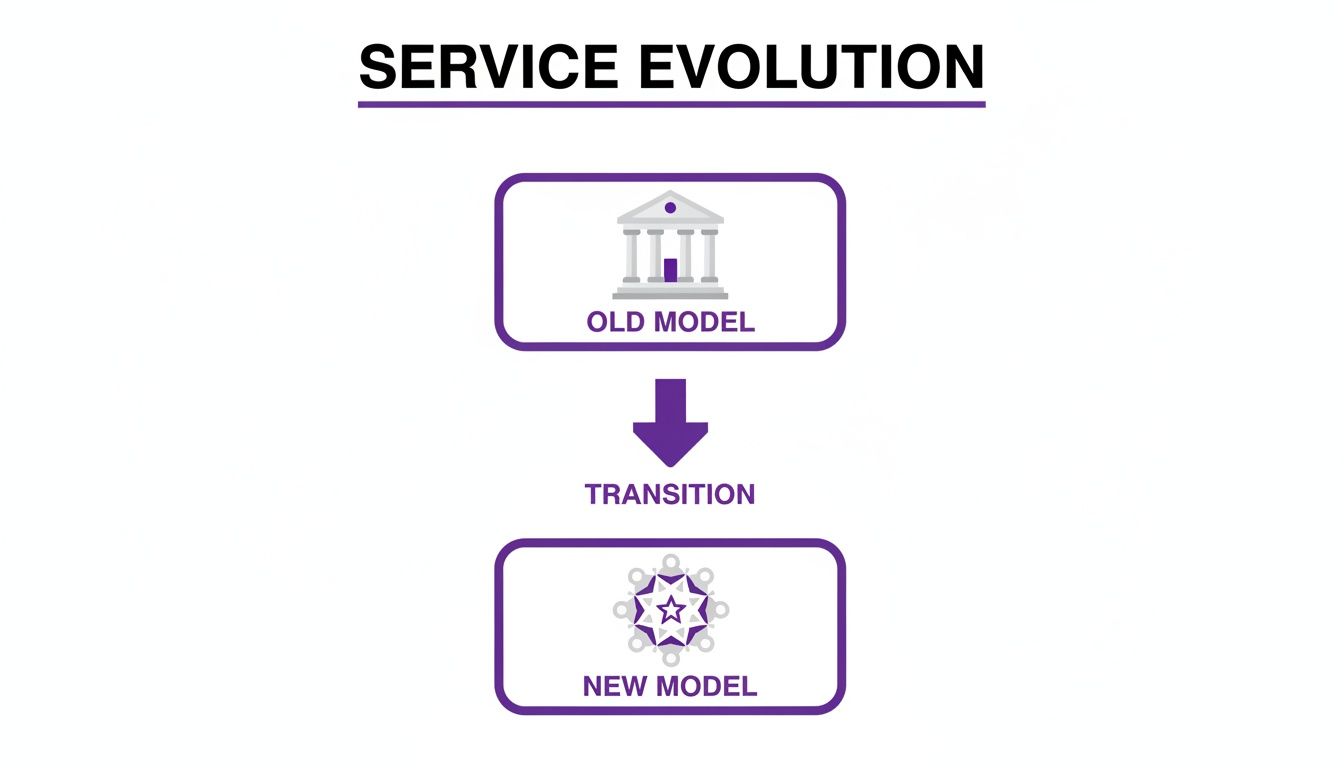
As you can see, it’s all about a crucial shift away from large, separate buildings towards a more integrated and personal system of support.
H3: Centre-Based Programmes
When people hear "day service," this is often what comes to mind. Centre-based programmes take place in a dedicated building and offer a structured, consistent timetable of activities. For many individuals who thrive on routine, this predictability is incredibly reassuring and a massive benefit.
These centres are often bustling hubs of activity. They provide a safe and familiar environment where people can socialise, learn new things, and take part in a wide range of sessions, from arts and crafts to cooking or getting to grips with a computer. They're an excellent choice for individuals who might need a higher level of support or are just beginning their journey towards greater independence.
H3: Community-Based Support
In complete contrast, community-based support moves the action from a single building out into the local area. The main goal here is all about integration and genuine participation in everyday life. It's about helping individuals become active, visible members of their own community.
So, what does that look like in practice? It could mean:
- Joining a local sports club or gym.
- Volunteering for a neighbourhood charity or community garden.
- Attending interesting courses at a nearby college.
- Learning to navigate public transport to visit shops, cafes, and libraries independently.
This approach is just brilliant for people who are keen to build their confidence in real-world settings and make connections beyond a dedicated service.
H3: Employability and Skills Training
For many adults with learning disabilities, the ambition to work is strong. That's where specialised day opportunities come in, focusing squarely on building the skills needed for the workplace. These aren't just about filling the day; they are about creating real, tangible pathways to employment.
These programmes get down to the nitty-gritty, concentrating on practical skills like timekeeping, working as part of a team, and understanding what’s expected in a job. Many also offer fantastic support with writing a CV, practising for interviews, and even arranging work experience in a supportive environment. To get a better idea of what this involves, you can learn more about our employability and money skills training, which helps build financial confidence alongside job readiness.
These specialised services directly address the desire for meaningful work, providing that crucial bridge between wanting a job and having the skills and confidence to go out and get one.
H3: Therapeutic and Wellbeing Activities
Finally, some day opportunities are designed with personal wellbeing at their very core. These programmes use therapeutic activities to boost mental and physical health, reduce anxiety, and improve overall quality of life. The focus is less on vocational skills and more on personal expression, relaxation, and sensory engagement.
Activities might range from art or music therapy and gentle exercise like yoga, all the way to mindfulness sessions and relaxing sensory room experiences. This model is particularly beneficial for individuals with more complex needs or those who find busy social situations a challenge, as it offers a calm and nurturing space for personal growth.
To help you see how these models compare at a glance, we've put together this simple table.
H3: Comparing Models of Day Opportunities
This table breaks down the key features, typical activities, and main benefits of the different types of day opportunities available for adults with learning disabilities.
| Type of Opportunity | Key Features | Example Activities | Primary Benefits |
|---|---|---|---|
| Centre-Based | Structured routine in a dedicated building | Group crafts, cooking, IT skills, social games | Safety, predictability, consistent social contact |
| Community-Based | Focus on integration and local participation | Volunteering, using public transport, joining local clubs | Increased independence, real-world skills, social inclusion |
| Employability Training | Prepares individuals for paid or voluntary work | CV writing, interview practice, work experience | Job readiness, practical work skills, confidence |
| Therapeutic | Enhances mental and physical wellbeing | Art/music therapy, yoga, sensory activities | Stress reduction, improved self-esteem, emotional regulation |
Hopefully, this gives you a clearer picture of the fantastic range of support out there. The key is finding the approach that best aligns with an individual's personal goals and support needs.
What Are the Real-World Benefits of a Great Programme?

The true value of high-quality day opportunities for adults with learning disabilities goes way beyond just having a place to go and a schedule to follow. While structure is certainly helpful, the real magic is in the small, everyday wins and the huge leaps in confidence that happen when people get the right support to shine. A great programme isn't just a service; it's a launchpad for a more independent and fulfilling life.
It’s about building a life, not just filling the hours in a day. The right environment gives people a sense of purpose, helps them forge genuine friendships, and empowers them to take on challenges they never thought possible. These aren’t just nice ideas—they are tangible, life-changing results that make a real difference in every part of a person's world.
Building Confidence and Essential Life Skills
One of the first things you’ll notice is a huge boost in self-confidence. This isn’t about empty praise; it’s confidence that’s earned by mastering practical skills that make a real difference to everyday living.
Imagine the pride in learning to cook a favourite meal from scratch or feeling safe enough to navigate the local community alone. Every new achievement, no matter how small it might seem to an outsider, is a massive step towards greater independence. These skills are taught in a supportive setting where it’s okay to make mistakes—that’s just part of how we learn. It’s also well-known that creative activities play a huge part, with proven art therapy benefits for mental health.
Key skills that really open up a person's world include:
- Travel Training: Getting the practical know-how and confidence to use buses and trains independently.
- Budgeting and Money Management: Learning how to handle cash, plan what to buy, and understand the basics of saving.
- Domestic Skills: Covering everything from cooking and cleaning to food hygiene and making healthy choices.
Our own focus on public transport training to access the community is all about unlocking these exact opportunities.
Forging Friendships and Boosting Wellbeing
Beyond the practical stuff, the social and emotional benefits are enormous. Many adults with learning disabilities are at high risk of feeling isolated. A brilliant day service tackles this head-on by creating a safe, welcoming space where lasting friendships can be built—not forced interactions, but real connections made over shared activities and mutual support.
The routine and purpose that come from attending a regular programme also work wonders for mental wellbeing. Having a reason to get up in the morning, people to see, and meaningful things to do helps reduce anxiety and build self-esteem. It provides a structure that’s both comforting and empowering.
"A great day programme doesn't just teach skills; it builds a community. It creates a space where everyone feels they belong, are valued for who they are, and can contribute in their own unique way."
Creating Real Pathways to Employment
For many, the ultimate goal is finding meaningful work. This is where high-quality day opportunities for adults with learning disabilities can be a complete game-changer, acting as a vital bridge to employment by providing the specific training and support needed to succeed in a job.
The need for this support is stark. In the UK, while a staggering 86% of unemployed adults with a learning disability want to work, only an estimated 26.7% are in paid employment. This huge gap shows a systemic failure to provide the right opportunities. Programmes that focus on work-ready skills aren't just a 'nice to have'; they are absolutely essential to tackling this exclusion.
By investing in person-centred day opportunities, we are investing in a future where more people can realise their potential, contribute to their communities, and achieve their own personal and professional goals.
How to Find and Fund the Right Support
Figuring out how to get the right support through the social care system can feel like trying to solve a complicated puzzle. But once you get to grips with the key steps and what the terminology actually means, the whole process becomes much clearer. The journey always begins with a chat with your local council.
This isn't about fitting people into a one-size-fits-all box; it’s designed to make sure support is genuinely based on what someone needs and wants. If you go into that first conversation prepared, you’ll be in a much stronger position to make the case for services that will truly make a difference. The aim here is to give you the know-how to unlock the right funding and find a place that feels like the perfect fit.
The Starting Point: Your Local Authority Needs Assessment
The first official step is to ask the adult social services department at your local council for a needs assessment. Under the Care Act 2014, everyone is entitled to one, and it won’t cost you a penny. Its whole purpose is to work out what help and support a person needs to live as independently and fully as possible.
It helps to think of the needs assessment as a detailed conversation, not some kind of test. A social worker will sit down with the individual and their family or carers to build a complete picture of their life – their strengths, their goals, and the challenges they run into day-to-day. Being really open and honest here is the most important thing.
To get ready, it’s worth thinking about a few things beforehand:
- What daily tasks are a real struggle?
- What would they love to be able to do? (This could be anything from making new friends and learning a skill to finding a job).
- What support do they already get from family and friends?
- What does a meaningful and enjoyable day look like to them?
This conversation is what helps the local authority decide if the person has eligible needs that require formal support.
Understanding Your Funding Options
If the assessment shows that support is needed, the next step is creating a care and support plan. This is a document that clearly sets out the specific needs that were identified and exactly how they're going to be met. At the same time, a personal budget will be worked out – that’s the amount of money the council has calculated it will cost to pay for everything in the plan.
You’ve got a few different options for how to manage this personal budget:
- Direct Payments: The money is paid straight to the individual (or someone they nominate), putting them in the driver’s seat to arrange and pay for their own support. This gives you the most choice and control, meaning you can choose providers like The Grow Project that you feel are a perfect match for your goals.
- Council-Managed Budget: The council takes care of arranging and paying for all the services on your behalf. This can be a simpler, less hands-on option if you'd rather not deal with the finances yourself.
- A Mix of Both: You can also have the best of both worlds. The council could manage some services for you, while you use a direct payment for others. It’s a great way to balance convenience with control.
A personal budget isn't just a sum of money; it's a tool for empowerment. It gives individuals and their families the power to choose the day opportunities that best match their personal aspirations, rather than simply accepting a pre-assigned service.
Finding the Right Information and Support
Remember, you don't have to go through this process on your own. There are brilliant organisations out there that offer free, expert advice to help you find your way. Disability charities and local advocacy groups can give you practical guidance on getting ready for assessments, understanding your rights, and can even help you challenge decisions if you feel the support you’ve been offered isn’t quite right.
Tapping into these resources can make all the difference, giving you the confidence to make informed choices every step of the way.
How to Choose a Provider That Genuinely Delivers
Once you’ve got an idea of the support you’re looking for and how it might be funded, it’s time for the next step: choosing the right provider. This can feel like a big decision, but it doesn't have to be overwhelming. Think of it less like a formal assessment and more like finding a partner who is truly invested in seeing people grow and flourish.
The very best day opportunities for adults with learning disabilities all have a few things in common. They feel welcoming from the moment you step inside, the staff are skilled and genuinely caring, safety is clearly a top priority, and they live and breathe person-centred planning. It’s all about finding a place where someone can feel valued, supported, and truly empowered to chase their own goals.
What to Look For When You Visit
When you start visiting or researching services, it helps to have a mental checklist. This way, you can look at each one fairly and focus on what really matters for achieving great outcomes.
Here are the key things to keep an eye on:
- Person-Centred Planning in Action: Don’t just take their word for it. Ask how they tailor activities to individual goals and what the process for creating and reviewing support plans looks like. A great provider sees the person, not just a space to fill in a group.
- Qualified and Passionate Staff: Pay close attention to how staff talk with the people they support. Do they sound respectful, engaged, and encouraging? It’s also worth asking about their qualifications, ongoing training (especially in things like safeguarding), and what the staff-to-member ratio is, as this has a huge impact on the quality of support.
- A Safe and Welcoming Feel: How does the place feel when you walk in? It should obviously be clean and safe, but more than that, it should feel like a happy and positive space where people are comfortable being themselves and trying new things.
- Meaningful, Varied Activities: Ask to see a timetable. Is there a good mix of activities that build practical skills, boost wellbeing, and help people connect with the wider community? The best programmes offer a balanced schedule that caters to different interests and abilities.
The real test of an excellent provider isn’t just in the list of activities they offer, but how they deliver them. It’s the difference between simply running a session and creating an experience that builds confidence, sparks friendships, and makes every day feel meaningful.
Excellence in Practice: The Grow Project
To give you a real-world example, let's look at how we put these principles into practice at The Grow Project's locations in Southampton and Littlehampton. Our entire approach is built on creating a dynamic and supportive environment where every single member can thrive.
Our programmes are designed from the ground up to build practical skills and confidence:
- Digital Inclusion: We teach essential skills for staying safe online and communicating with others, opening up the digital world in a secure way.
- Employability and Money Skills: We run practical sessions that prepare people for the world of work, helping them move towards greater financial independence.
- Community Projects: Our members get stuck into local initiatives, building a powerful sense of belonging and showing them just how much they have to contribute.
Take one of our members, "Alex." He first came to us feeling very anxious in social situations. Through our structured arts and community outing programmes, he slowly started to build his confidence. Our team worked with him to create a personalised plan that focused on small, achievable communication goals. Fast forward to today, and Alex is an active participant in group projects and has made some brilliant friends. His story is a perfect example of how a supportive, well-structured environment helps people achieve things they never thought possible.
That's what you should be looking for—a provider that delivers these kinds of real, life-changing results.
Your Questions Answered
When you're first exploring day opportunities for an adult with a learning disability, it's completely normal to have a lot of practical questions. Let's walk through some of the most common things we get asked by individuals and their families, so you can feel more confident taking the next step.
How Do I Know Which Type of Service Is Best?
The right service is always the one that clicks with the person's own goals, personality, and support needs. A great starting point is to think about what they really want to get out of it. Is the main aim to make new friends? Or perhaps it’s about learning practical skills for a future job, or simply building the confidence to get out and about in the community.
Honestly, the best way to know for sure is to visit a few different places. It gives you a genuine feel for the atmosphere and you can see first-hand how they work with their members.
What’s the Difference Between a Personal Budget and a Direct Payment?
Think of a personal budget as the total pot of money the local council works out is needed to meet your assessed care and support needs.
A direct payment is simply one way of getting that money. It’s paid straight to you or a nominated person, putting you in the driver's seat. This gives you the freedom and control to choose and pay for the services and support that you think are best.
Are Day Opportunities Available Five Days a Week?
It really depends on the provider. Many services, like The Grow Project, run programmes from Monday to Friday because it helps build a consistent and reliable weekly routine.
That said, some people might only be funded for a couple of days a week, or they might just prefer to attend part-time. Good providers are flexible and will work with you to create a timetable that fits what you need.
Choosing a day opportunity is about finding a supportive community where an individual can feel safe, valued, and empowered to grow. The right environment should feel like a partnership between the member, their family, and the service provider.
How Much Do Day Opportunities Cost?
The cost can vary quite a bit. It often depends on the provider, the level of support someone needs (like one-to-one staffing), and the kinds of activities on offer.
Typically, funding comes from the personal budget you receive from the local authority after they've done a needs assessment. The best advice is always to have a direct chat with the providers you're interested in to understand their specific fees.
Ready to discover a place where confidence, friendship, and independence flourish? The Grow Project offers a dynamic and supportive environment with programmes in Southampton and Littlehampton. Explore our services and see the difference we can make by visiting us at https://thegrowproject.org.uk.