You might be looking at volunteer listings and feeling pulled in two directions at once. You want to do something useful, but you also don’t want to step into a role you’re not trained for, or promise time you can’t give, or get safeguarding wrong.
That hesitation is healthy. Volunteering with adults with learning and physical disabilities is rewarding, but it works best when it’s structured, supervised and built around the person rather than the volunteer’s good intentions.
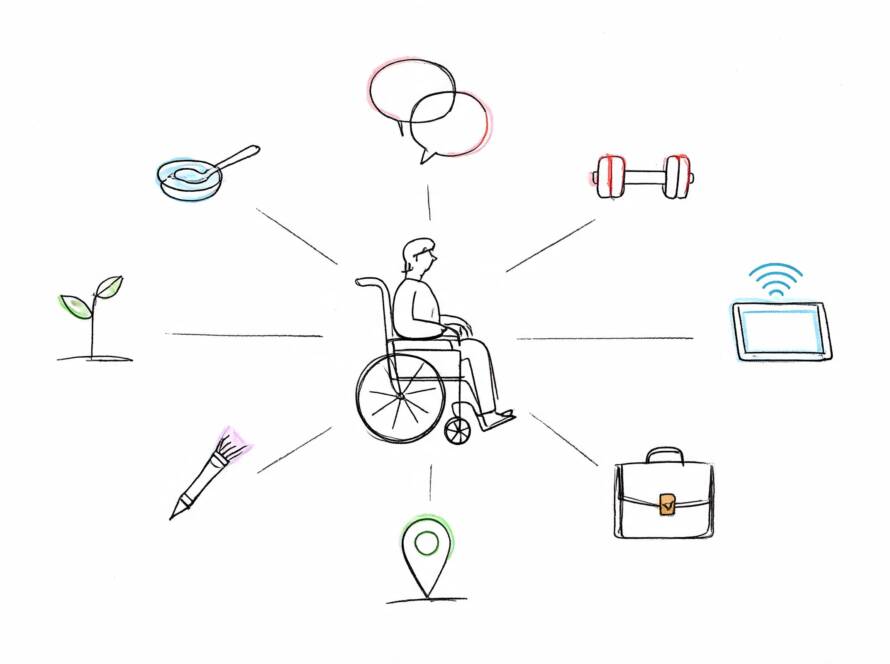
The strongest volunteer special needs roles in the UK aren’t about “pitching in wherever needed”. They’re about helping adults take part in ordinary life with the right support, pace and consistency. That can mean supporting a cooking session, accompanying a community outing, encouraging communication in a group activity, or helping someone practise safe online habits. Small actions matter when they’re repeated well.
Why Your Support Matters for Adults with Special Needs
Many people first think of volunteering in terms of charity. In practice, with adults who have learning and physical disabilities, the more useful way to think about it is participation. A good volunteer helps create the conditions for someone to join in, make choices, build confidence and be seen as part of the wider community.
That matters because too many adults are still shut out of everyday opportunities. In South East England, only 22% of adults with learning disabilities participate in community activities like volunteering, compared to 65% of non-disabled adults, according to the ONS 2024 Community Life Survey reference provided here. That gap isn’t just a number. It reflects missed friendships, reduced independence and fewer chances to practise the skills that make adult life feel fuller and more self-directed.
Support is most useful when it is local and regular
Weekday services often need volunteers who can show up consistently and work alongside staff in calm, practical ways. The role usually isn’t dramatic. It’s steady.
That might mean helping a member settle into an art activity, walking with them to a café on a community trip, or giving them time to finish a sentence rather than rushing in. These are ordinary moments, but they’re often the moments in which confidence grows.
Practical rule: Good volunteering doesn’t take over. It creates space for the person to do more for themselves.
Families and carers often spend a long time trying to find support that feels both safe and meaningful. If you want to understand what thoughtful, day-to-day support can look like for adults with disabilities, this guide to support for adults with disabilities is a useful place to start.
The role is practical, not sentimental
People are often nervous about “saying the wrong thing” or not having specialist knowledge. That’s common, and it shouldn’t stop you applying. Most reputable organisations will train you. What they can’t train as easily is reliability, patience and a willingness to respect someone’s pace.
There’s also a wider emotional side for families and support networks. Many carers carry a lot, and they’re often trying to balance safety, independence and wellbeing all at once. Sometimes broader mental health support matters alongside practical services. For readers navigating family strain or emotional burnout, resources such as finding Vernon Counselling may help frame those conversations, even if your own support is local to the UK.
If you’re drawn to volunteer special needs work, that instinct is worth taking seriously. The need is real, and the best roles give your time a clear purpose.
Your First Steps to Becoming a Volunteer
The application process is usually more formal than people expect. That’s a good sign. Adults in day services deserve safe, well-run support, and volunteers should know exactly what they’re stepping into.
A proper process usually includes an enquiry, application form, interview, references, a DBS check, induction and some role-specific training. If an organisation skips most of that, be cautious.

What organisations look for first
You don’t usually need prior disability support experience. You do need to show that you can be trusted in a supported environment.
A review of Hampshire County Council’s Family Support Volunteers programme found that interviewers focused on empathy and boundary management, and also identified a 33% dropout rate when trained volunteers faced delays between training and starting, which is why prompt placement matters in well-run services, as detailed in the Hampshire Family Support Volunteers review.
In plain terms, that means interviewers are listening for things like:
- Can you listen without taking over: Staff want volunteers who can support autonomy rather than doing everything for someone.
- Do you understand boundaries: You’re part of a team, not a lone rescuer, friend-on-demand or replacement support worker.
- Will you turn up when expected: Consistency is often more useful than enthusiasm without follow-through.
- Can you stay calm: Group settings, communication differences and changes to routine all require a steady approach.
What a DBS check actually means
If you’re volunteering with adults who may be vulnerable, an enhanced Disclosure and Barring Service check is normally part of the process. This isn’t an accusation and it isn’t unusual. It’s standard safeguarding.
The organisation usually explains what identification documents you need and submits the check as part of onboarding. If anything in your history might raise questions, it’s better to discuss it candidly rather than hope it won’t matter. Good organisations want clarity.
A careful recruitment process protects members, staff, families and volunteers. It also gives you a much clearer idea of the role before you commit.
Questions worth asking before you say yes
The interview isn’t only for the provider. It’s also your chance to judge whether the role is organised properly.
Ask practical questions such as:
- What will I do in a typical session
- Who supervises volunteers on site
- What training happens before I start
- How are incidents or concerns reported
- How quickly can I begin after training is complete
That last question matters more than people think. If someone completes training and then hears nothing for weeks, confidence drops and momentum goes with it. Good volunteer management keeps the process moving.
If you’re applying for volunteer special needs roles, look for structure, clear communication and sensible safeguards. Those are not barriers. They’re signs of a service that takes people seriously.
Essential Training for a Confident Start
Most volunteers start with goodwill and very little role-specific knowledge. That’s normal. A strong service assumes you’ll need preparation and builds it in from the start.

What good training usually covers
A solid induction should give you enough grounding to support safely and ask better questions once you’re on site. In day services, that usually includes safeguarding, communication, confidentiality, boundaries, basic disability awareness, and how to respond if someone becomes anxious, dysregulated or unwell.
It should also explain the organisation’s way of working. In person-centred services, the focus stays on the individual’s goals, choices and preferred support style. If that approach is new to you, this explanation of what person-centred care means in practice is worth reading before you begin.
Generic help and tailored support are not the same
Many volunteer programmes often get the balance wrong. A kind volunteer in a generic role can be helpful. A trained volunteer in a structured, skills-focused setting is usually more effective.
A 2025 Skills for Care report covering 2,500 cases in Hampshire and West Sussex found that 8% of adults with learning disabilities in standard volunteer schemes secured paid work within a year, compared with 35% in specialized day service models that included employability modules and trained support, according to the Skills for Care reference provided here.
That doesn’t mean every volunteer role should aim at employment. It does mean training should connect your support to real outcomes. If a member is working on travel confidence, money skills, communication or teamwork, your role needs to support those goals rather than drift into passive supervision.
The best training keeps going after induction
One-off training sessions aren’t enough. Volunteers usually need:
- A named point of contact: Someone you can ask when you’re unsure.
- Shadowing time: Watching experienced staff before leading support yourself.
- Feedback that is specific: Not “you did fine”, but “give him more processing time before repeating the question”.
- Refreshers on boundaries and safeguarding: Especially after a break or role change.
What works in practice: Volunteers grow fastest when training is linked to real situations, not abstract theory.
Confidence doesn’t come from memorising the right words. It comes from understanding the environment, knowing your boundaries, and seeing how your support fits into someone’s wider plan.
Your Day-to-Day Role and Activities
The day-to-day reality is far more varied than most applicants expect. One session might involve helping set up a group activity indoors. Another might involve walking to a local shop, supporting someone to order a drink, or encouraging them to use a bus route they’re learning.
That variety is one reason people stay. You’re not doing the same task on repeat. You’re helping adults practise ordinary life in manageable steps.

What a typical session can include
In a structured day service, volunteers often arrive before members, get a quick briefing from staff and check the plan for the day. You might be told who needs extra support with transitions, who is working on communication goals, or which outing needs a steady walking pace.
Then the practical work starts. You may help with:
- Creative sessions: encouraging participation in art, music or simple group tasks without criticising or over-directing
- Food preparation: supporting hygiene routines, turn-taking and confidence in the kitchen
- Community access: accompanying outings, helping with road safety, café ordering or queueing
- Digital activities: sitting alongside someone as they learn basic device use or online boundaries
- Social practice: helping members greet each other, join conversations and manage group routines
For a broader sense of the kinds of structured sessions adults may take part in, this overview of activities for adults with learning disabilities gives useful context.
Transport support often changes everything
Community participation sounds simple until transport gets in the way. In many areas, getting from home to meaningful activity is one of the biggest practical barriers.
According to a West Sussex needs assessment, transport is a primary accessibility barrier for disabled adults who want to volunteer, which makes support with community outings and public transport training especially important, as noted in the West Sussex disability volunteering summary.
That’s why some of the most valuable volunteer tasks don’t look glamorous. Walking a route together, modelling how to ask a driver for help, waiting calmly when a bus is late, or helping someone recover if a journey changes unexpectedly can all build independence over time.
If a member can travel more confidently, their world usually gets bigger very quickly.
Example volunteer roles and responsibilities
| Volunteer Role | Typical Activities | Skills You'll Use |
|---|---|---|
| Activity support volunteer | Assisting with crafts, games, discussion groups and simple planning tasks | Patience, encouragement, observation |
| Community outings volunteer | Supporting café visits, walks, shopping trips and venue access | Route awareness, calm communication, punctuality |
| Kitchen and life skills volunteer | Helping with food prep, tidying routines and healthy habit prompts | Practical coaching, hygiene awareness, teamwork |
| Digital inclusion volunteer | Supporting device use, online safety discussions and basic digital tasks | Clear explanations, boundary awareness, consistency |
| Group participation volunteer | Helping members join conversations, take turns and manage transitions | Active listening, emotional steadiness, respectful prompting |
The best volunteers notice small details. Who hangs back at the start of a session. Who rushes because silence feels uncomfortable. Who needs a visual cue rather than another verbal instruction. Those observations help staff adjust support in real time.
Key Skills for Effective and Safe Support
Good intentions help you start. Practical skill helps you stay useful.
The strongest volunteer special needs support rests on three habits. Communicate in a person-centred way, respond calmly to behaviour without taking it personally, and keep professional boundaries even when relationships become warm and familiar.

Communicate so the person can lead
Many adults with learning disabilities process language differently. Some need extra time. Some rely more on routine, gesture, visual support or short phrases. If you ask three-part questions at speed, you may get no answer at all, even from someone who understands much more than it first appears.
Useful habits include:
- Use one idea at a time: Break tasks into manageable steps.
- Pause before repeating: Give processing time.
- Check, don’t assume: Ask what support helps rather than guessing.
- Talk to the person directly: Even when a staff member is nearby.
For anyone considering support work or volunteering in these settings, this guide to the activity support worker role explains the importance of consistency and respectful communication.
Behaviour is communication
You won’t always know why someone is withdrawn, agitated or refusing an activity. The safest response is curiosity, not confrontation.
Look first at the environment. Is it noisy, rushed, unfamiliar or physically uncomfortable? Has the plan changed? Is the instruction unclear? Volunteers should report patterns to staff, not try to diagnose or manage everything alone.
On shift advice: Stay calm, lower the pace, and let permanent staff lead on anything that moves beyond routine support.
Digital inclusion is now part of safe support
Volunteering no longer happens only in physical spaces. The NCVO’s Time Well Spent 2023 report found that 36% of disabled people volunteered online, compared with 29% of non-disabled people, while 1.4 million disabled people in the UK lack internet access, according to the Statista summary citing NCVO data. That creates a double task for services. Support people to take part online, and do it safely.
In practice, volunteers may help members with basics such as logging in, recognising scams, understanding privacy, or knowing what is and isn’t appropriate to share. If you want a simple overview of workplace-style risk awareness that can sharpen your own judgement, these actionable safety topics are a useful companion read.
A few digital ground rules help:
- Keep support visible: Avoid private messaging outside agreed systems.
- Use approved devices or processes where possible: Don’t improvise with personal accounts.
- Report concerns early: Odd messages, unsafe contact or repeated confusion should go to staff.
- Teach boundaries plainly: Online friendliness is not the same as online safety.
Volunteers are most effective when they’re warm, steady and easy to trust. They’re safest when they remember they are part of a team.
How to Apply with The Grow Project and Other Providers
If you’ve read this far, you probably don’t need persuading. You need a sensible next step.
Start local. Adult disability services usually work best when travel is manageable and the provider can offer regular sessions, proper induction and clear supervision. For Hampshire and West Sussex, that means looking closely at weekday services, community organisations and volunteer programmes that already support adults rather than only children or one-off events.
A practical way to shortlist providers
Use these checks before you apply:
Read the role carefully
Look for clear duties, training details, safeguarding language and who supervises volunteers.Check the age group and setting
Some organisations mainly support children, schools or occasional events. If you want volunteer special needs work with adults, make sure the role is adult-focused.Ask about routine and reliability
Find out whether they want weekly support, flexible cover, or event-based help.Confirm induction and DBS arrangements
A professional provider should explain the process clearly.Notice how they communicate
If emails are vague before you start, support may be vague once you’re in post.
Where to look if you want options
The Grow Project operates in Ocean Village, Southampton, and Rustington, Littlehampton, offering weekday day services for adults aged 18+ with learning and physical disabilities. If you’re exploring that kind of environment, look for providers that combine structured activities with community access, life skills and person-centred planning.
You can also search through national and local channels such as Volunteer Centres, local authority community pages, NCVO directories and Do-it style volunteering platforms. The key is to filter for adult disability support, weekday availability and supervised roles rather than broad listings that tell you very little.
When you contact a provider, keep your message simple. Say when you’re available, whether you have any relevant experience, and why this area of volunteering interests you. You don’t need a perfect background. You do need a thoughtful reason for applying and a realistic sense of your availability.
If you want to explore a structured volunteer role in a weekday adult service, The Grow Project is a strong place to start. With services in Southampton and Rustington, it supports adults with learning and physical disabilities through person-centred activities, community outings and practical life skills. Reach out through their website to ask about current volunteer opportunities, the onboarding process and how your availability could fit the team.